Vegetable Stock.

Homemade vegetable stock: SUCH a helpful ingredient to have around. I make this stuff in huge batches and keep it in my freezer for whenever I need it, which is as least once a week. I always cook couscous and quinoa in stock to boost their flavor, and it’s also fantastic for sauces, soups, and cooking veggies. Also, it’s practically free. Here’s why: in a freezer bag, I save up all of my otherwise-throw-away-able bits of carrot peel, onion skin, garlic skin, celery leaves, herb stems, whatever I’ve got around, and once the bag is full, I’m ready to make a gorgeous pot of stock out of things I would otherwise have tossed. So why not recycle by making your own stock? It tastes great, has no preservatives and no sodium, and it’s free. The ultimate homemaker’s trick!

INGREDIENTS

enough frozen vegetable bits to fill a pot – I use onion skins, garlic skins, carrot peels, and celery leaves
seasoning to taste – I try to stick with the Scarborough Fair rule of parsley, sage, rosemary, and thyme, but I was out of rosemary. Instead I used a bit of marjoram, just because I felt like it.
3 bay leaves
a palmful of peppercorns
Note: I go back and forth about salting my stocks. It’s a saltiness control thing. Stock absolutely needs salt, but then stock is also an ingredient in other dishes that get their own salt. Skipping the salt in your stock means you’ll have more control over the final dish’s saltiness. Does that make sense? Pun very much intended, salt is just a matter of taste. Add it, don’t add it, we’ll all survive.

DIRECTIONS

Put all the veggie leftovers and the flavorings in a Dutch oven or large pot. Cover with cold water.

Bring to a boil and then turn down to a simmer. Cover and cook 2-3 hours.

When the stock is done, turn off the heat and let it cool a little bit. Then use a mesh strainer to strain everything out.

You’re left with a giant bowl of super flavorful, glistening amber vegetable stock—lucky you. I reserve a few cups of it to keep in the fridge for use in the next week, and then I pour the rest of the stock into ice cube trays to freeze. I pop the stock cubes out of the trays and keep them in a bag, so I can use exactly the right frozen portion whenever I need them in the next few months. Unendingly convenient, this is definitely one of my favorite recipes!
Pea and Asparagus Risotto.

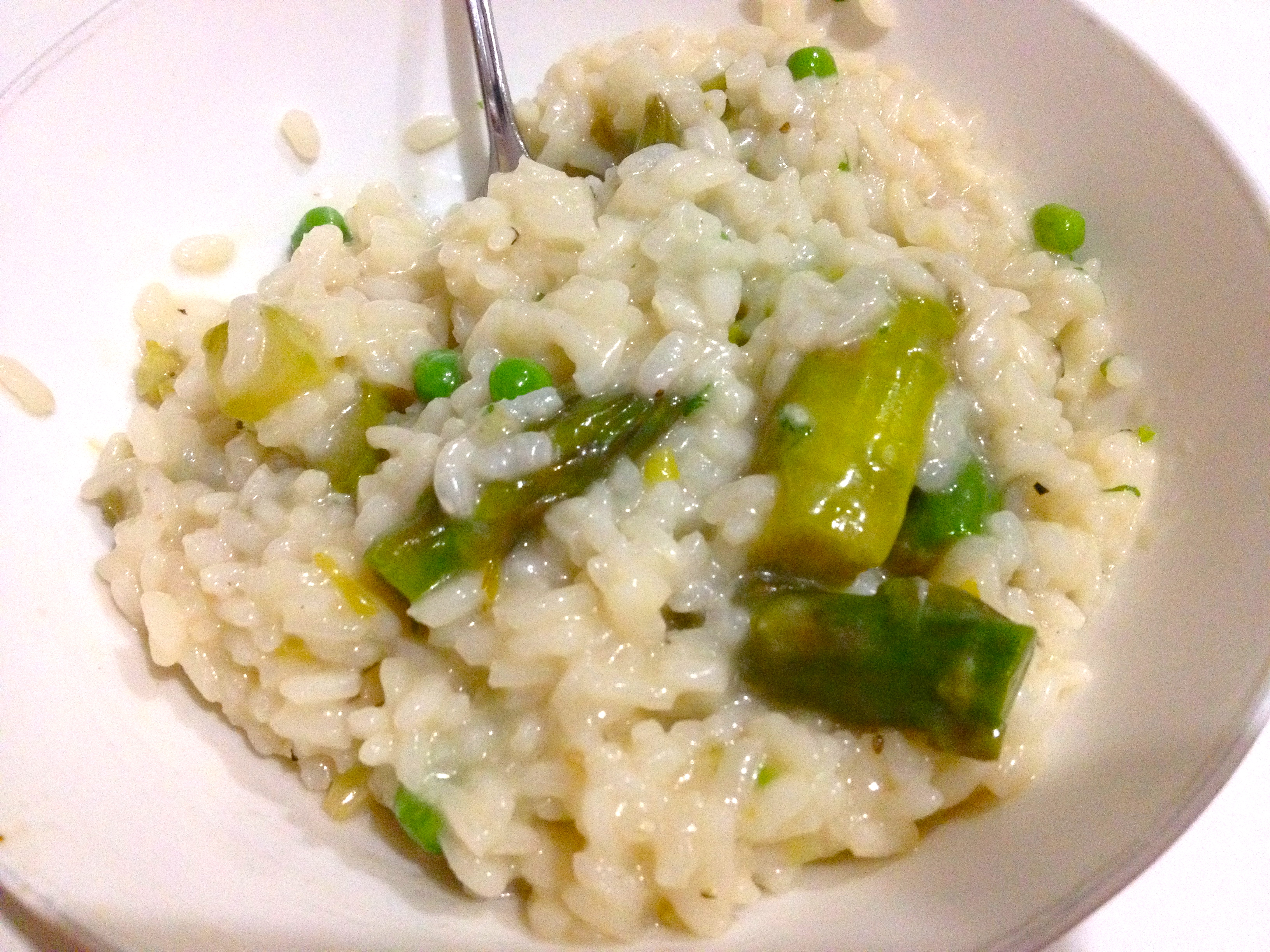
I get so excited when I’m out to lunch or dinner and I see a special risotto on the menu, and I almost always order it. I just think it doesn’t get any better than creamy, cheesey risotto, especially with some perky green vegetables in the mix. That’s why I made it for dinner this week! Risotto has a reputation as a hassle of a homemade dish, but I think that’s rather harsh and undeserved. It’s not that it’s at all difficult to make, it’s just that it takes some effort. In fact, risotto is actually pretty easy, if you can handle a bit of extended stirring in front of the stove. So if you find yourself with a free evening and you’re feeling like cooking up something special, risotto is definitely the perfect dish. Every time I make it, I’m amazed at how beautifully creamy it becomes—why is it so darn good?!

INGREDIENTS

1 bunch of asparagus, ends trimmed
4-6 cups chicken stock (vegetable stock is fine too)
3 green onions, sliced
olive oil
2 cups arborio rice
1 cup dry white wine
3/4 cup frozen peas
1/2 cup Parmesan cheese, shredded
fresh parsley, chopped
lemon zest, to taste (I like just a pinch)
salt and pepper to taste

DIRECTIONS

Because risotto demands your full attention, make sure to have everything prepped before you start. First, blanche your asparagus in a shallow pan of boiling water until just barely tender but still crisp, about 2 minutes, and then plunge them into an ice bath to stop the cooking process. Chop the asparagus into bite-sized pieces and set aside.

In a saucepan, heat stock to a low simmer and continue to simmer it, so that it’s nice and hot when you add it to the risotto. Cold stock will interfere with the rice cooking process because it will need to heat up each time you add it, so this step is important.

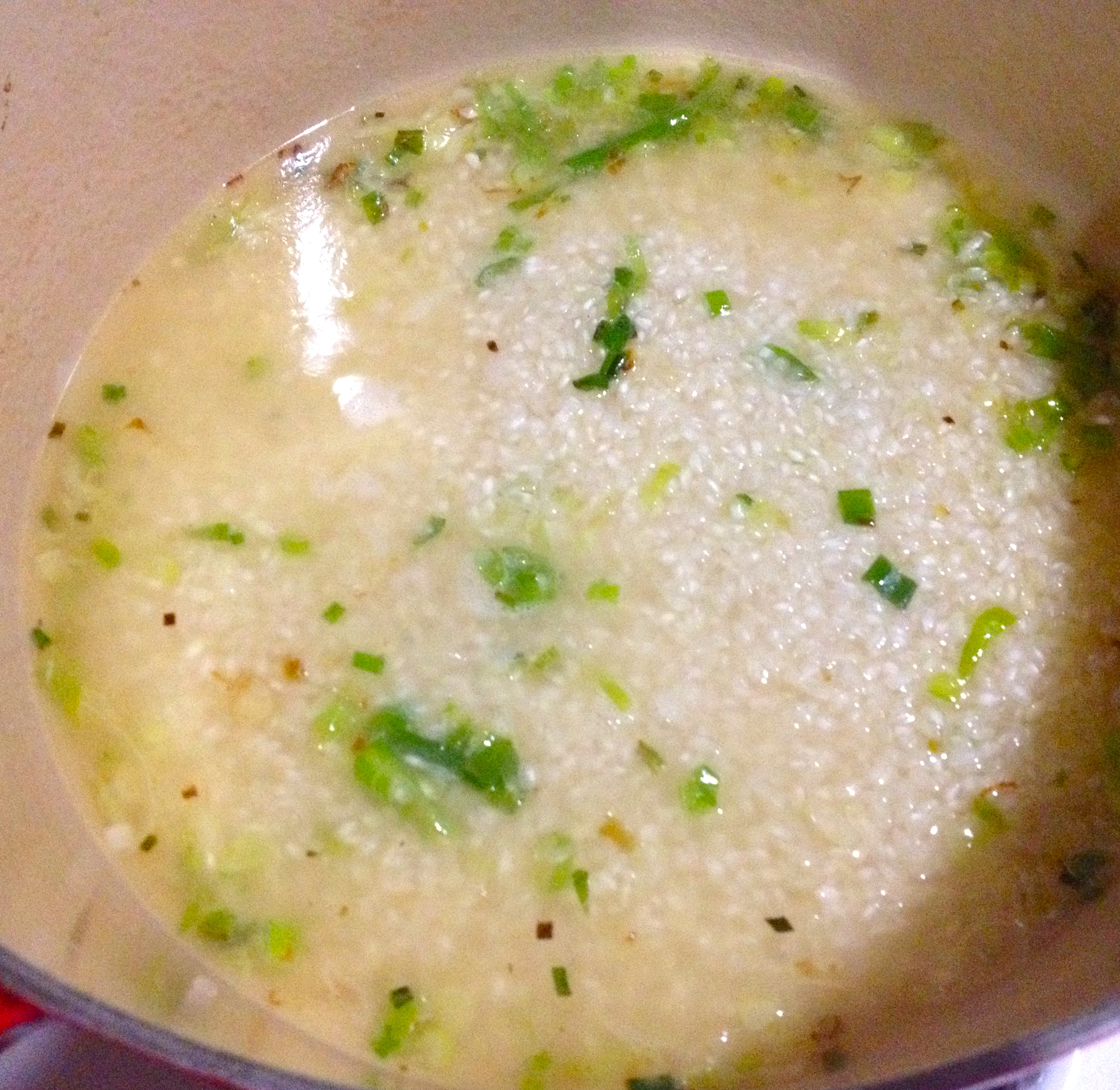
Now heat a Dutch oven or other large pot over medium to low heat. Oil the pan and add the green onion and a pinch of salt. Cook about 2 minutes, stirring occasionally, and then add the rice. Stir well and cook the rice until the sides are transparent and you see an opaque white spot in the center, about 3-5 minutes. That means it’s time to start adding the liquid!

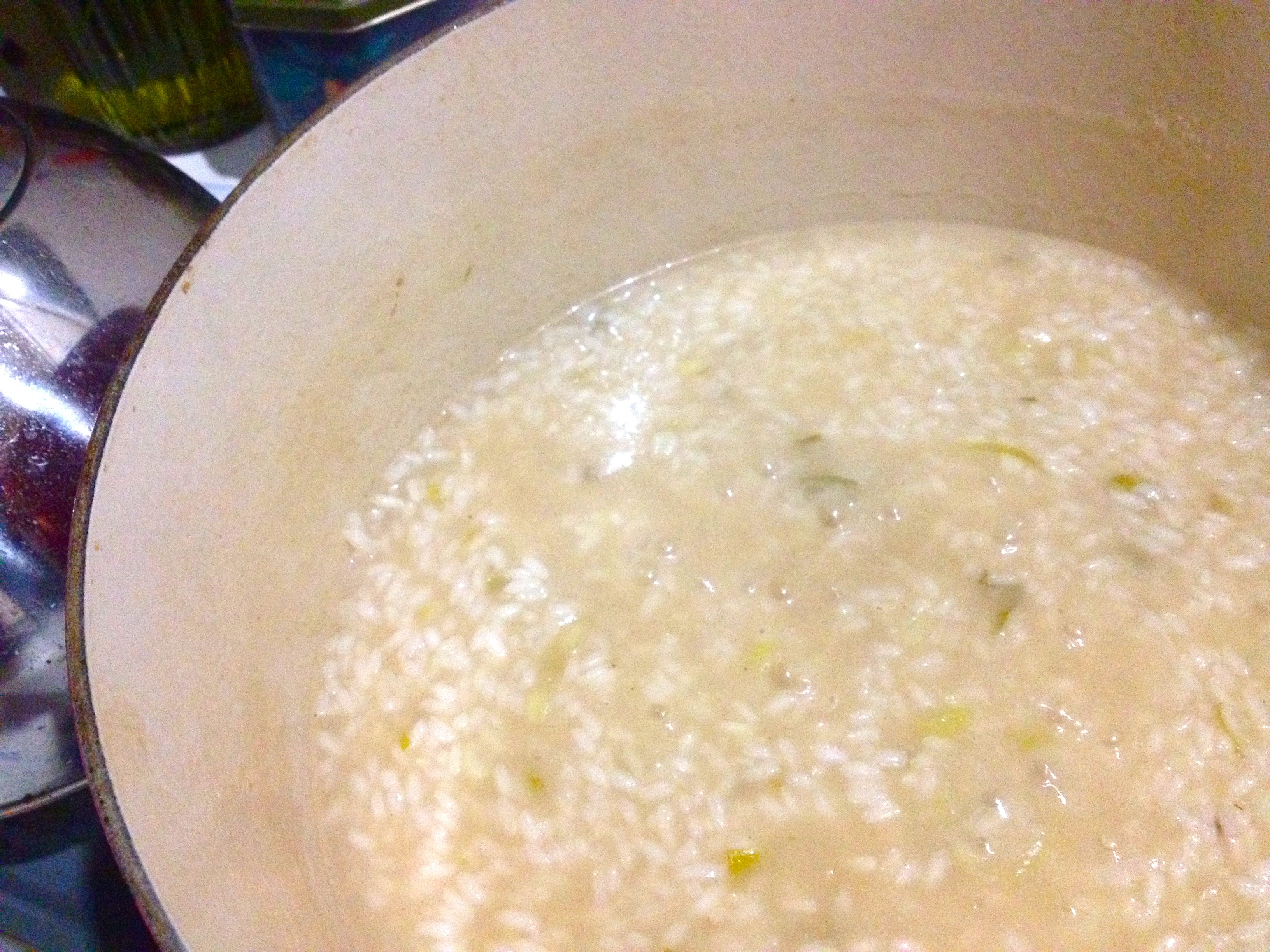
First, pour in the wine and stir until almost all of the liquid is absorbed. Then, add the first ladle of stock—just enough to submerge all the rice.

Stir almost constantly as the rice absorbs the stock. Once nearly all this stock is absorbed, add the next ladle, again just submerging the rice. Repeat this process until you add your final ladle of stock.

Once you’ve added the last bit of stock, drop in the asparagus and peas. Then stir until all the stock is absorbed, and remove form heat. The rice should be creamy and tender, with a little bit of a chewy texture.

Sprinkle in the Parmesan cheese, parsley, lemon zest, and salt and pepper to taste. Serve with an extra sprinkle of cheese and enjoy the fruits of your foodie labor!

Apple Walnut Cake.

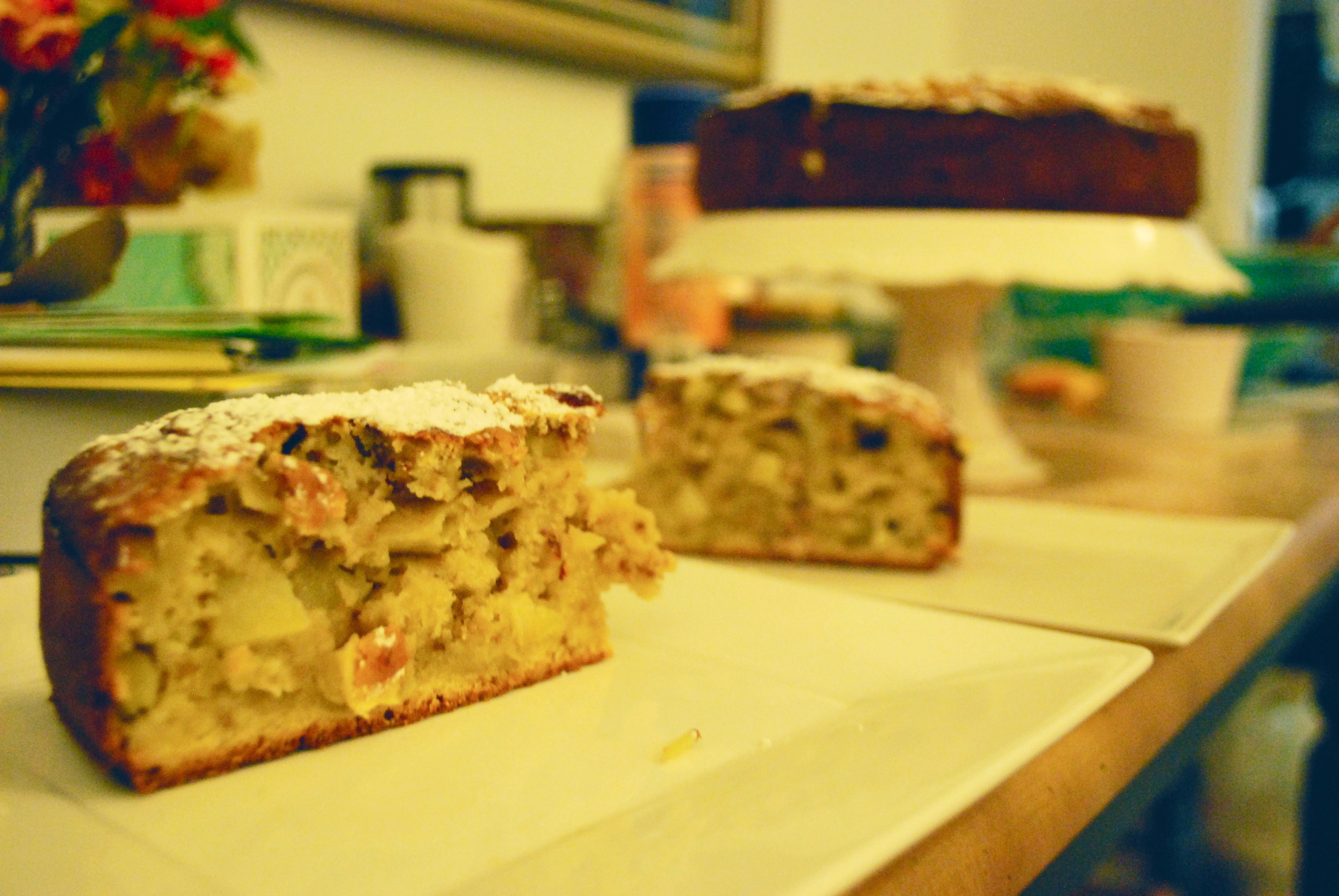
Many many thanks to fantastic art director and mi amiga Vanessa Palacio for photographing this cake for me! These are by far the most expert and mouth-wateringly gorgeous shots that have graced KellyintheKitchen. And not only that, but she also picked the apples herself on a recent apple orchard excursion, so muchas muchas gracias a ti, Vane!! We got together on Sunday at my apartment to bake this yummy apple walnut cake, inspired by a similar recipe from smitten kitchen. It’s a pretty unique cake—we loved that instead of butter, this recipe calls for olive oil and lemon-flavored yogurt, which really changes the texture and makes it super moist and soft. After all our hard cake-prep work, it was quite a struggle waiting for our pastel de manzanas y nogales to finish baking, but once it was done (and had posed for its close-up), each bite was everything we dreamed of and more. Nos gusta comer manzanas.

INGREDIENTS

1 cup sugar
1/4 cup packed brown sugar
4 eggs
1 cup lemon yogurt
1 tbsp vanilla extract
2 1/4 cups all-purpose flour, sifted
1 1/4 tsp baking powder, sifted
1/2 cup plus 2 tbsp olive oil (NOT extra virgin)
3 apples, peeled, cored, and diced
1/2 cup walnuts, toasted and chopped
1 tsp cinnamon

DIRECTIONS

Preheat oven to 350 F.

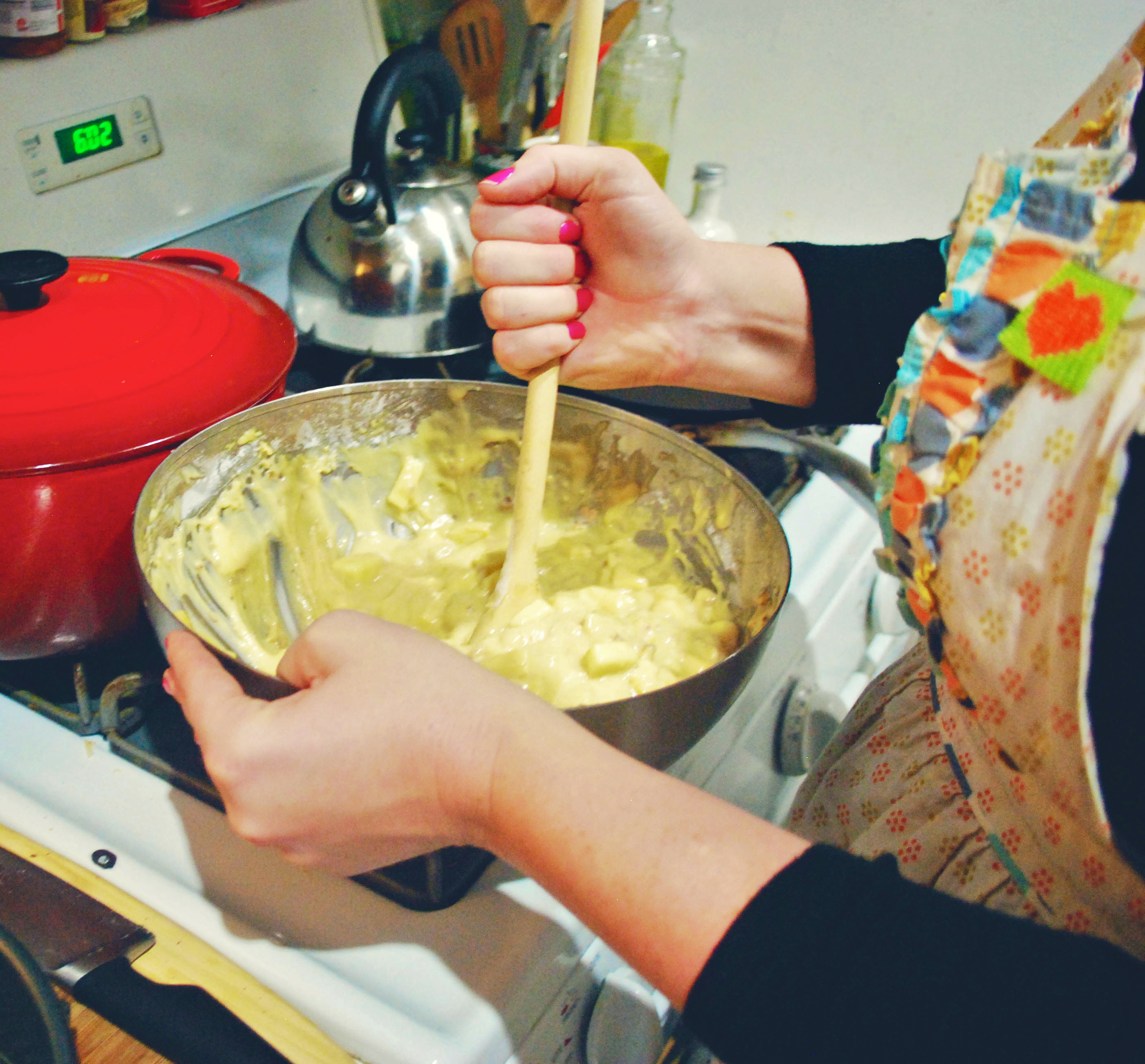
Beat the sugar, brown sugar, and eggs until totally smooth and incorporated. Stir in the yogurt and vanilla.

Sift the flour and baking soda in a bowl. Alternate adding half the flour mixture and half the oil, stirring between each addition.

Then fold in the apples and walnuts.

Pour into a greased springform pan and shake from side to side, to distribute batter evenly. Sift the cinnamon over the cake.

Use the handle end of your spoon to swirl the cinnamon into the top of the batter.

Bake for 55-60 minutes until the top of the cake is golden brown and springs back when you press it gently. If you find that a toothpick inserted into the cake never comes out clean, don’t worry—the toothpick test doesn’t work with this cake. It’s too moist!

Dust with powdered sugar…

…and enjoy!

Cauliflower Soup with Herbed Croutons.

Fall is a fabulous season for cooking. The best fall dishes are all about warmth, richness, and substance…the kind that make you want to join our forest friends and hibernate for a while. And after you eat this cauliflower soup, you will think seriously about doing just that. Smooth, creamy cauliflower soup, lightly spiced with coriander and cumin, is even better topped with crunchy homemade herbed croutons—they’re really worth the bit of extra effort. So here’s another recipe to add to the list of easy soups that are way cheaper when homemade, but just as delicious and probably better for you (f you ignore the first ingredient).

INGREDIENTS

for soup:
3 tbsp butter, divided
olive oil
1 onion, diced
1 1/2 shallot, minced
2 large carrots, diced
1 small parsnip, diced
3 cloves garlic, minced
1/8 tsp cumin
1/8 tsp coriander
2 tbsp dried parsley
1 tbsp tomato paste
1 head cauliflower, broken up into small pieces
stock or water
1/4 cup flour
2 cups whole milk
salt and pepper to taste

for croutons:
1 baguette, cut into cubes
olive oil
pinch paprika, parsley, thyme
salt and pepper to taste

DIRECTIONS

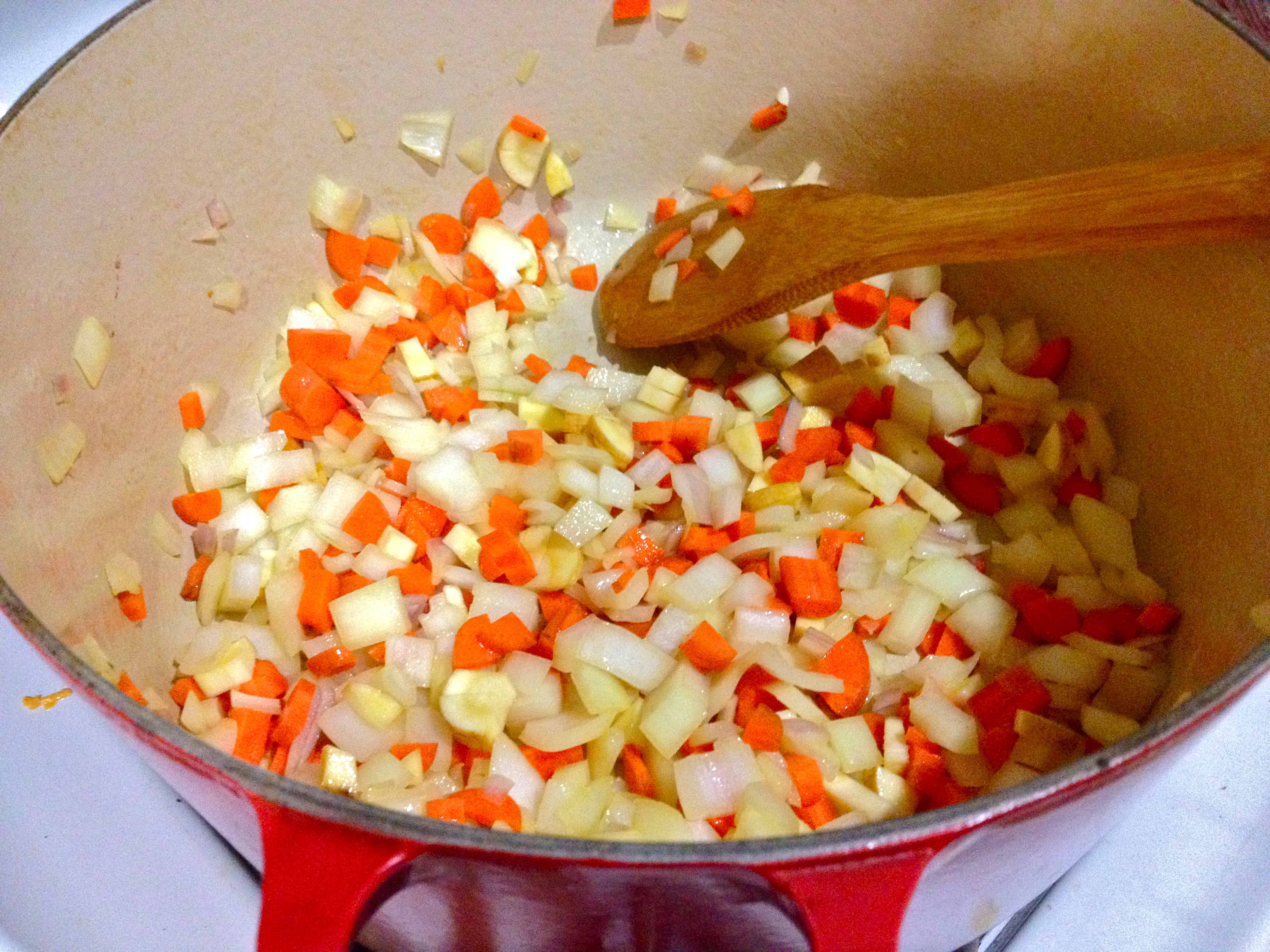
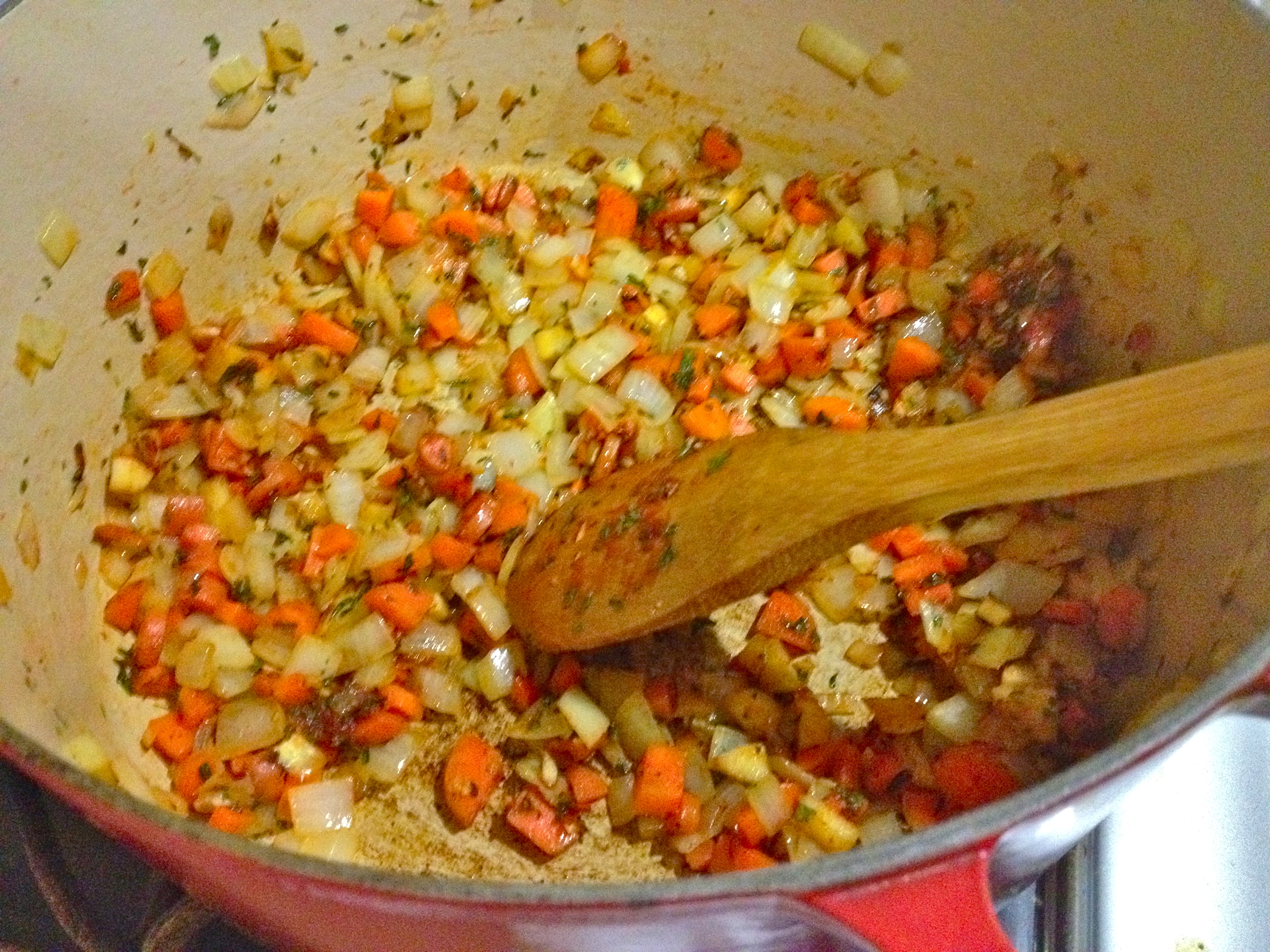
Heat 1 tbsp butter and a drizzle of olive oil in a Dutch oven or other large pot. Add onion, shallot, carrot, and parsnip. Cook until onion is softened. Then add the garlic and cook another minute.

Stir in the cumin, coriander, parsley, and tomato paste, and cook until fragrant (a minute or two should do it).

Then add the cauliflower and cook for 5 minutes before pouring in enough stock or water to just about cover the veggies. Bring to a boil, then turn down to a simmer and cover. Cook until the cauliflower is soft and tender.

Now get the croutons going. Preheat oven to 400 F. Toss the cut-up bread in olive oil, paprika, parsley, thyme, salt, and pepper, and spread out onto a foil-lined sheet pan.

Bake until croutons are browned and a bit crispy. Set aside.

Meanwhile, in a saucepan, melt 2 tbsp butter. In a bowl, whisk together flour and milk. Slowly pour the milk mixture into the melted butter, whisking constantly. Add a bay leaf to the milk mixture and continue to whisk. When the milk is just about to boil, remove from heat and pour directly into soup. Simmer uncovered for 15 minutes, stirring occassionally.

Once the soup is thickened, it’s done. But if you want a little bit smoother texture, you can puree about half of the soup and then stir the puree back in. Then top it with croutons and some chopped fresh parsley and dig in! Happy Fall.

Roasted Brussels Sprouts and Homemade Garlic Mayonnaise.

There are certain recipes that all chefs should know how to prepare. Some are grand and time-consuming, like coq au vin or borsch, and others are simple and versatile, like cream scones or chicken stock. Often these types of recipes are all about getting the technique right, which can be much more difficult than it sounds. I always have a couple of difficult recipes that I’m working on, trying a few times to make sure I’ve got them right before I post anything about them. Luckily for me, homemade mayo was one I got right the first time! It takes a strong arm, a steady hand, and a good eye, but it really isn’t so difficult when you get down to it. A whisk here, a few drops there, followed by a bit of frantic whisking-while-pouring, and you’ve got yourself a beautiful homemade mayonnaise. Crispy golden brown Brussels sprouts are the perfect accompaniment to this garlic mayo, but you’ll definitely have some leftovers on you hands, so go crazy and mayonnaise it up while you’ve got this beautiful fresh stuff around. Chicken salad sandwiches maybe? Or BLTs spread with a generous glob of mayo on perfectly toasted wheat bread? If there ever were a time to be glamorous and indulgent with your food, it’s when you’ve got access to your own homemade mayonnaise.

INGREDIENTS

for Brussels sprouts:
a few handfuls of Brussels sprouts, the smaller ones halved and the larger ones quartered
olive oil
salt and pepper to taste

for mayonnaise:
1 egg yolk, room temperature (raw egg warning blah blah blah)
1 tsp vinegar (I used white vinegar)
3/4 tsp dijon mustard
not quite 1 cup oil (I used a mixture of olive and canola, with a bit more olive than canola)
2 cloves garlic, minced
salt and pepper to taste

DIRECTIONS

Preheat oven to 400 F.

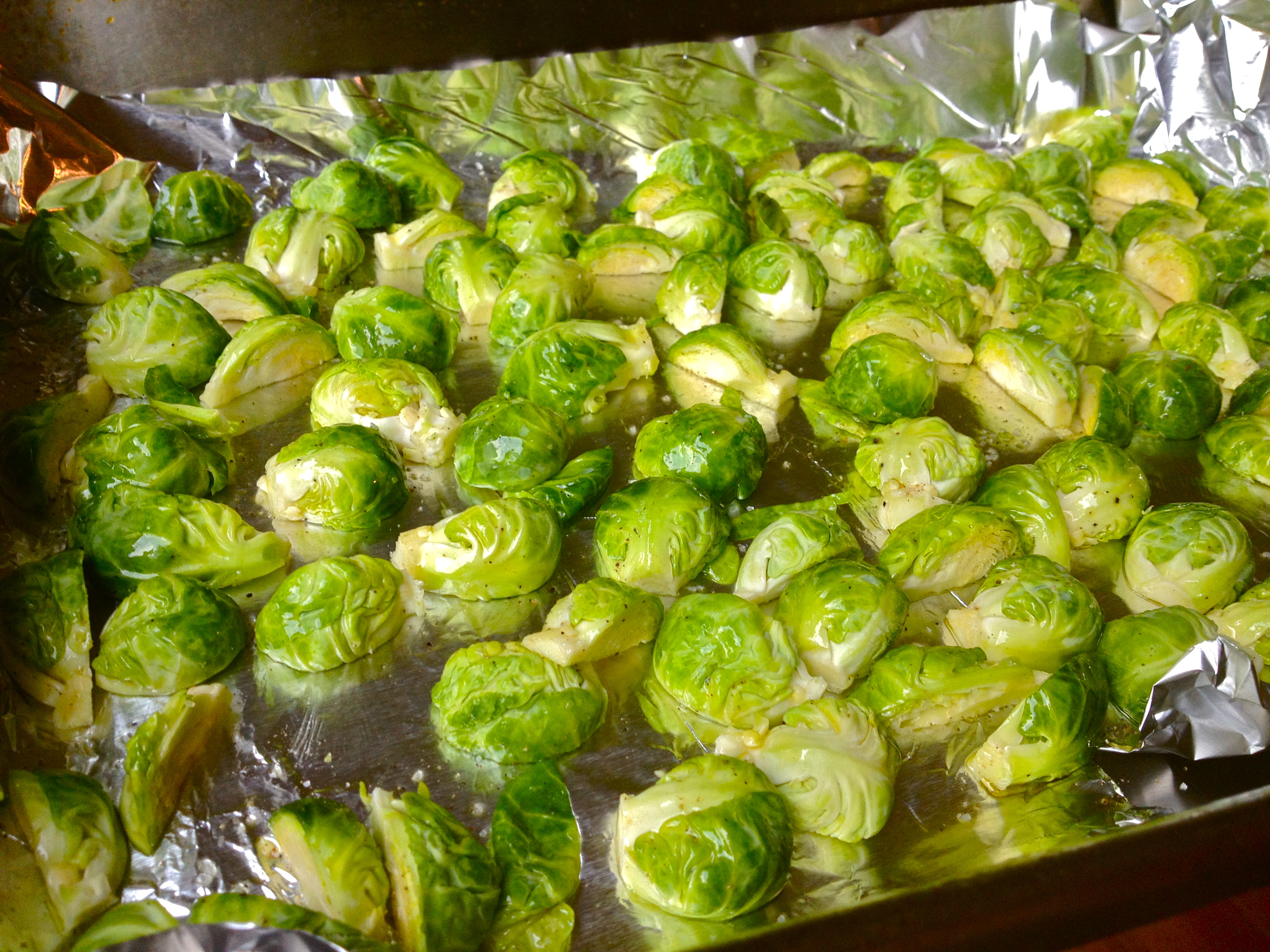
Toss Brussels sprouts with olive oil, salt, and pepper, and spread in a single layer on a foil-lined pan. Bake until slightly crispy and browned.

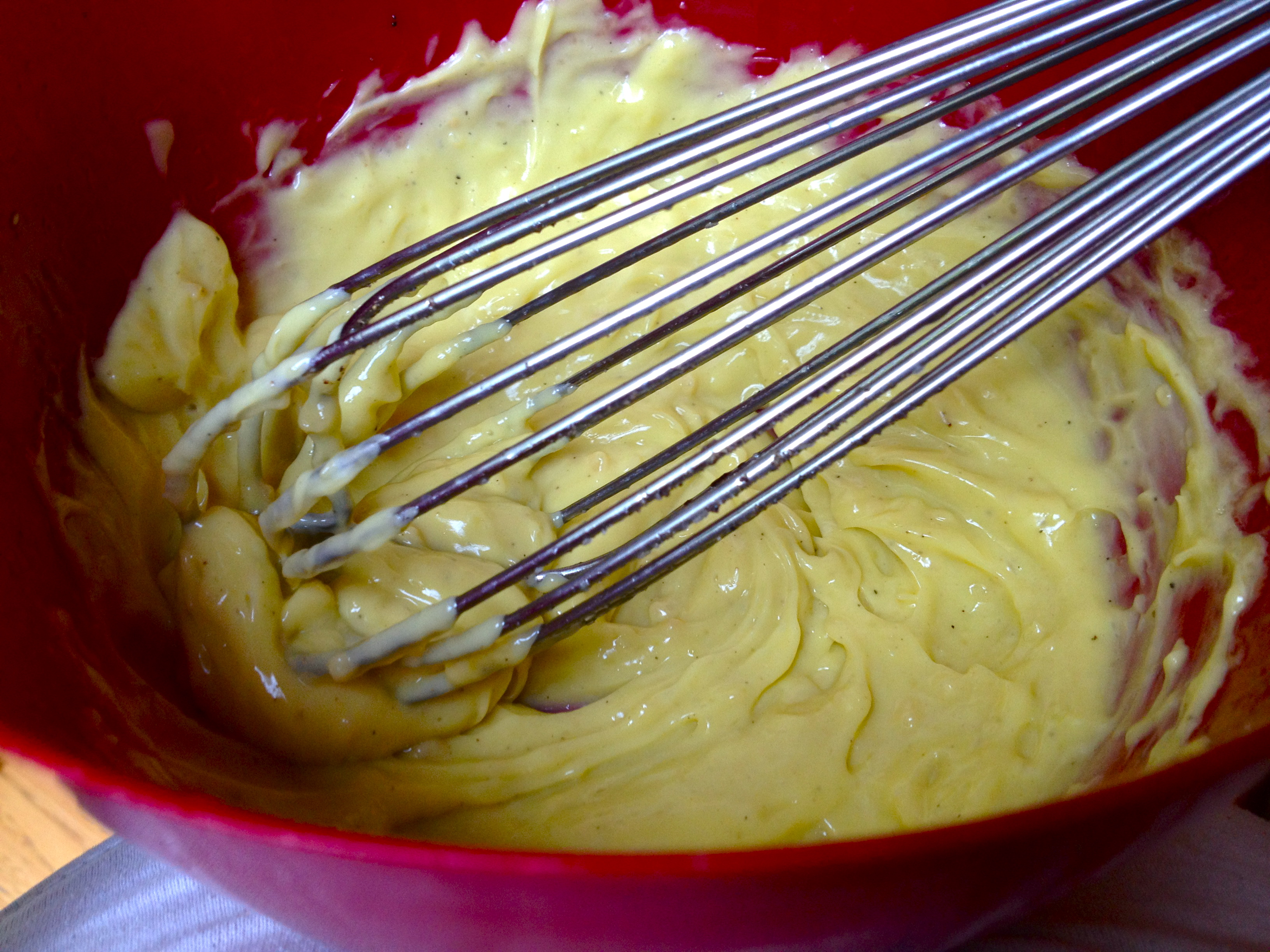
While the Brussels sprouts cook, mix up the mayo. Whisk together egg yolk, vinegar, and mustard. Whisking constantly, add a few tiny drops of the oil mixture at a time until the mixture emulsifies. Add the rest of the oil in a steady stream until it’s all incorporated into a smooth, pale yellow mayo.


At this point, whisk in the lemon juice, salt, pepper, and garlic.

That’s all! Scoop the mayo into a ramekin and serve it as is, at room temperature, or cool it off in the fridge for a while. Serve as a dip with the hot Brussels sprouts. You’ll have a lot of mayo leftover, so do something amazing with it (it won’t last as long as preservative-y store-bought mayo so use it up quick!).

Unemployed Shepherd’s Pie.

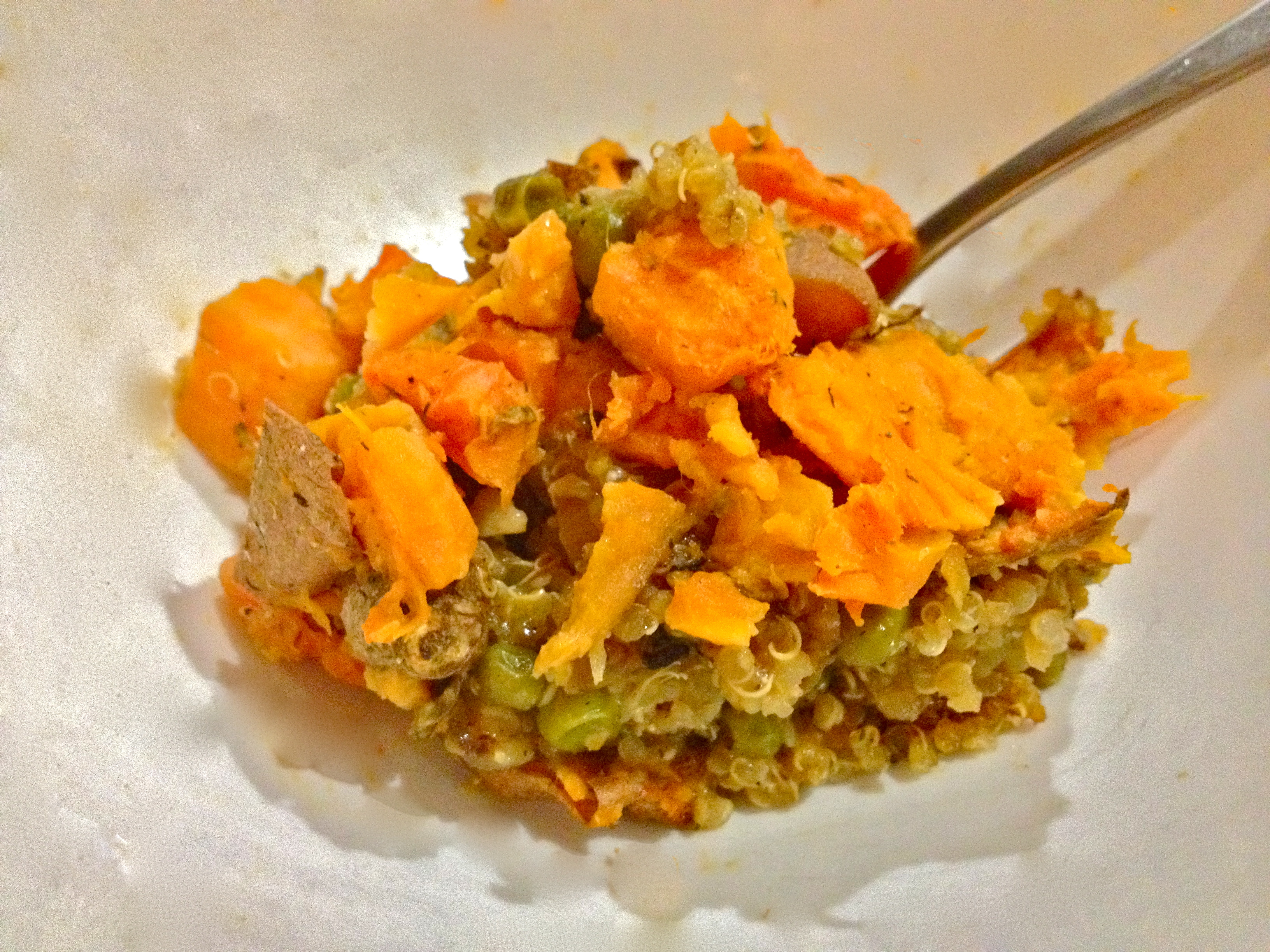
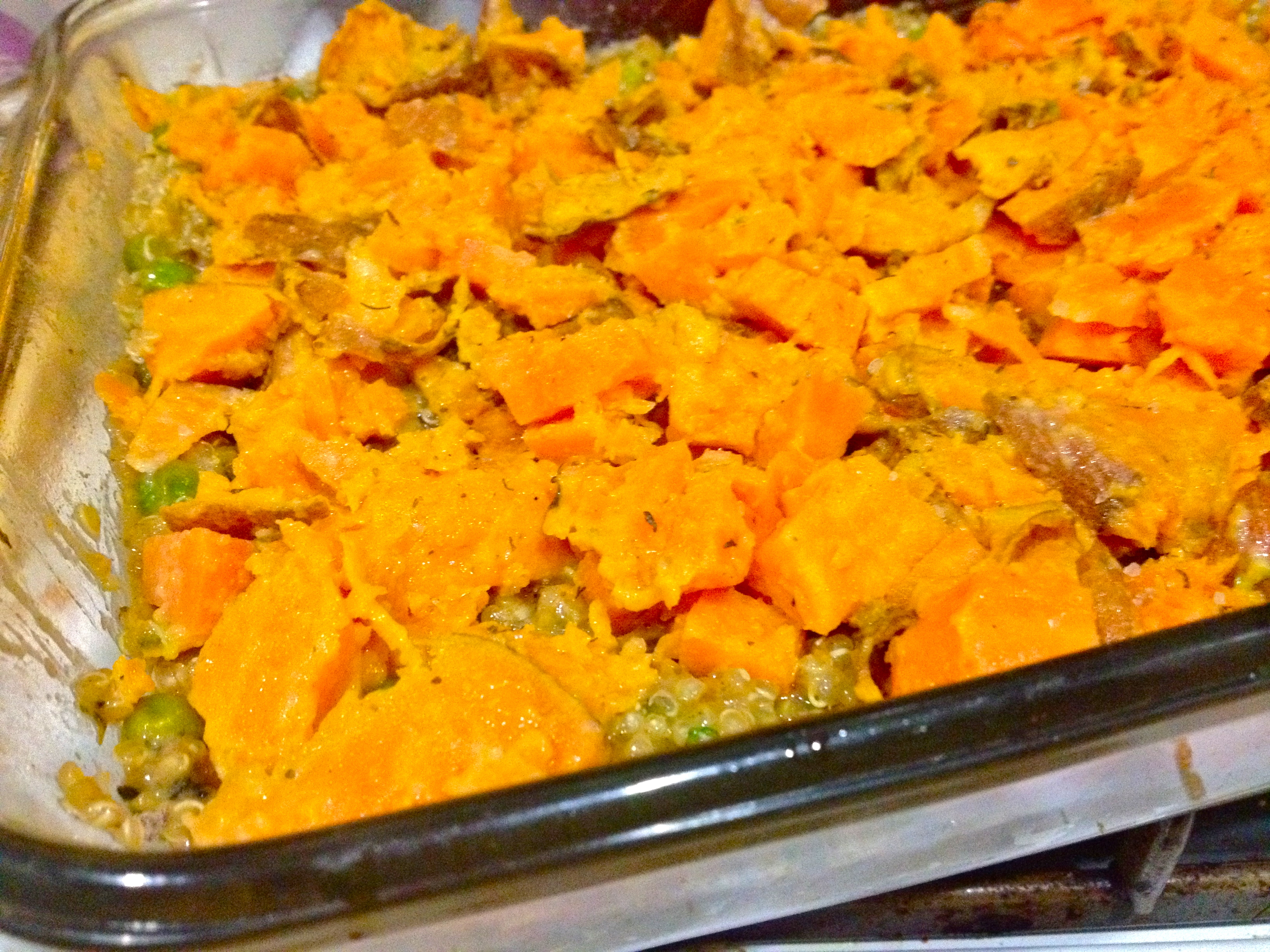
A shepherd without a flock, a shepherd’s pie without any meat. This is an “unemployed shepherd’s pie” because there are no animals being shepherded into it! A little twist on a previous recipe, my vegetable pot pie, this yummy baked veggie and quinoa dish crowned with creamy mashed sweet potatoes is a meatless, gluten-free, almost guilt-free indulgence (there’s a cup of half and half in it, which adds some fat and keeps it from being vegan). A creamy, savory, and super filling dish, it’s also totally versatile, so play around with the veggies. Carrots and celery are always welcome, spinach or leeks would be a great addition, and maybe add a little bit of hot sauce right into the quinoa to provide a bit of a kick. It’s meant to be a flexible, peasant-food-y kind of meal for a chilly, hungry night. Vegetarian comfort food at its best!

INGREDIENTS

2 large sweet potatoes, thoroughly washed
1 cup quinoa
1 1/2 cups vegetable stock
1 medium onion, medium dice
1 small shallot, minced
1 tsp fresh rosemary, minced
1/4 tsp hot paprika
1/4 tsp cumin
salt and pepper to taste
olive oil
2 cloves garlic, minced
1 cup frozen broccoli, cut up
1 cup frozen peas
1 tbsp potato starch or corn starch
2 tbsp soy sauce
2 tbsp white wine
1 tbsp lemon juice
1 cup half and half, divided
1 tsp fresh parsley, chopped

DIRECTIONS

Preheat oven to 400 F.

Pierce each potato a few times and place on a baking sheet. Bake until soft, about an hour. Set aside.

Add quinoa and vegetable broth to a small pan. Bring to a boil, then turn down and simmer until all the liquid is absorbed. Set aside.

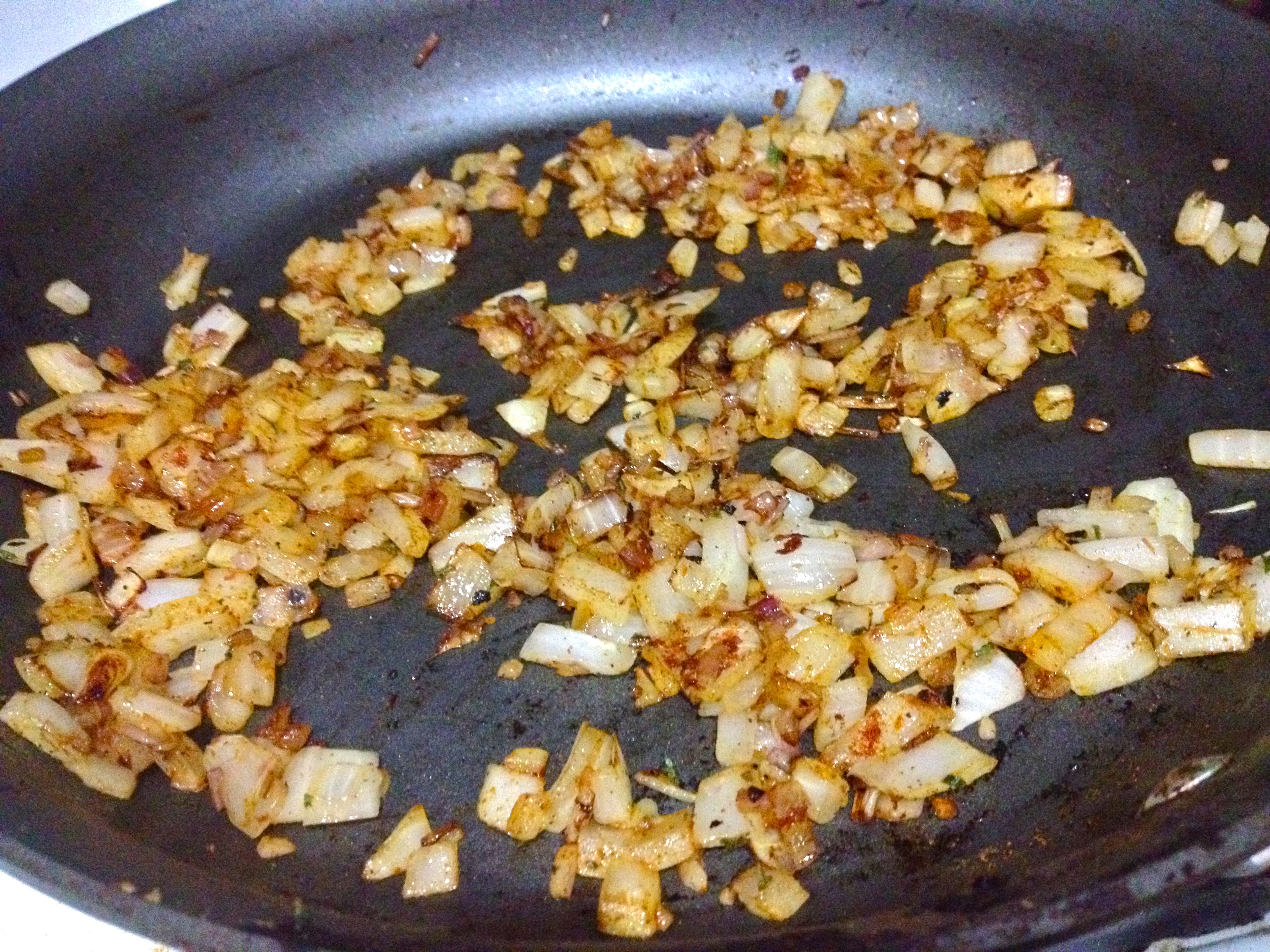
Add olive oil to a pan over medium and cook onions, shallots, paprika, cumin, rosemary, salt, and pepper until the onions have softened.

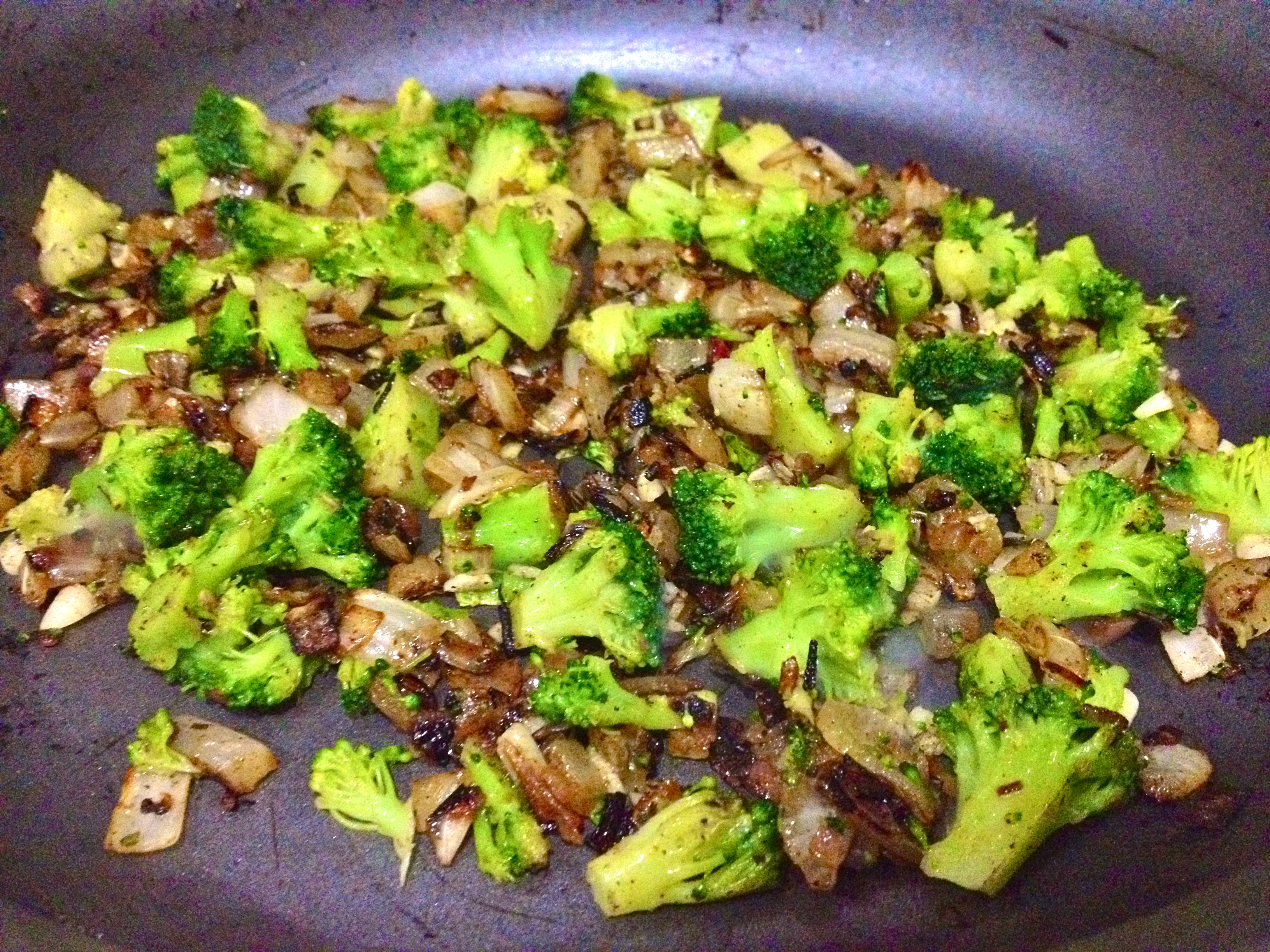
Stir in the garlic and cook 1 minute. Then add broccoli and cook until starting to soften.

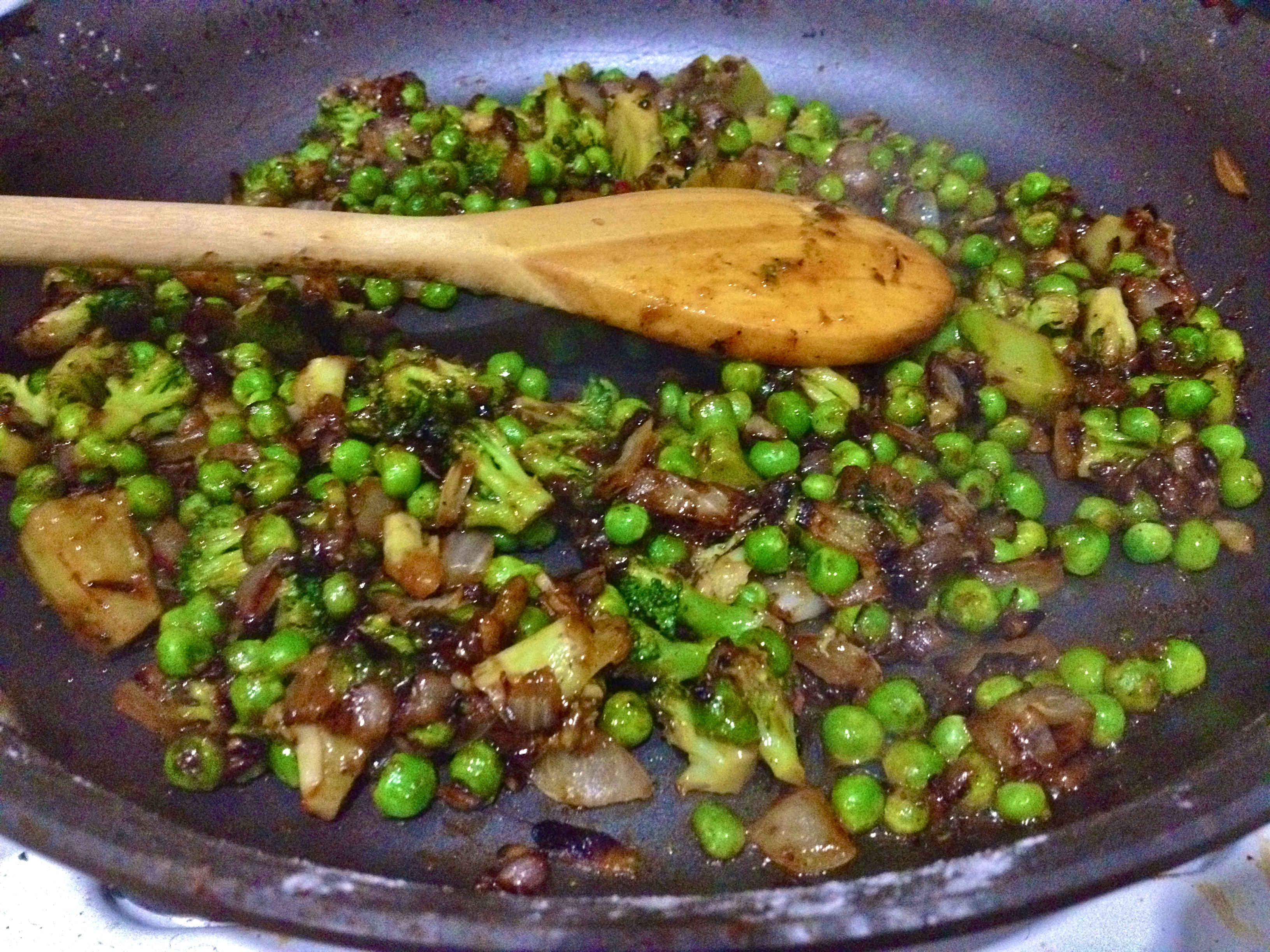
Add peas and stir, cook for 30 seconds, and stir in the starch. Turn down the heat to medium low and cook for one minute.

Now add the soy sauce, wine, and lemon juice. Cook for another minute.

Stir in 3/4 cup of half and half and simmer until it becomes like a thick sauce. Remove from heat.

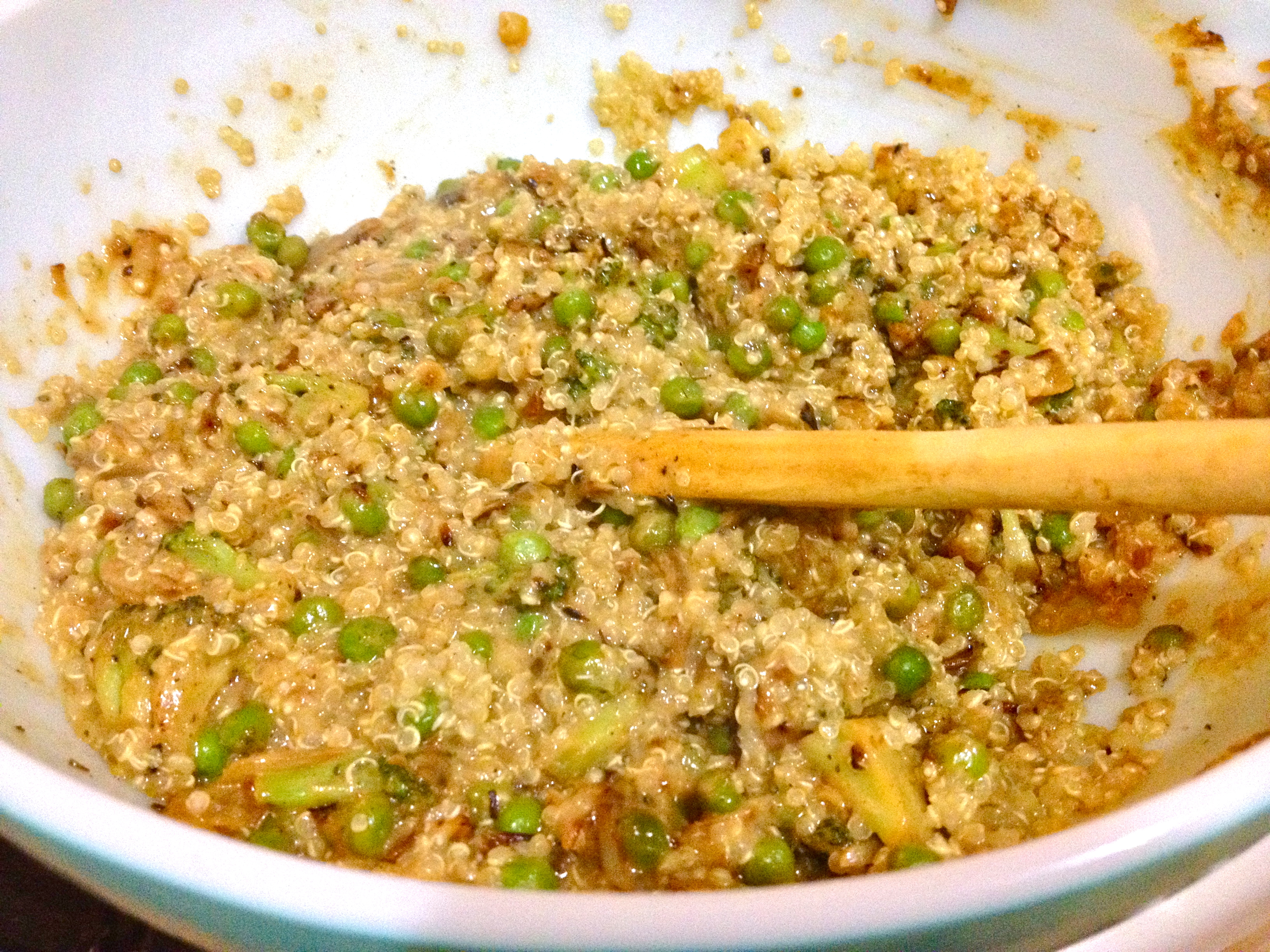
In a large bowl, combine quinoa, vegetable mixture, and parsley.

In another bowl, mash the sweet potatoes, skins on, with the remaining 1/4 cup of half and half.

Spread quinoa mixture into a greased pan and top with the mashed sweet potatoes (mashed if you’re more patient than I was–I just kind of roughed them up a bit and spread them over). Sprinkle with additional salt and pepper if you like.

Bake 1 hour or until the top starts to get crunchy in places. Cool a bit before serving and dig in!