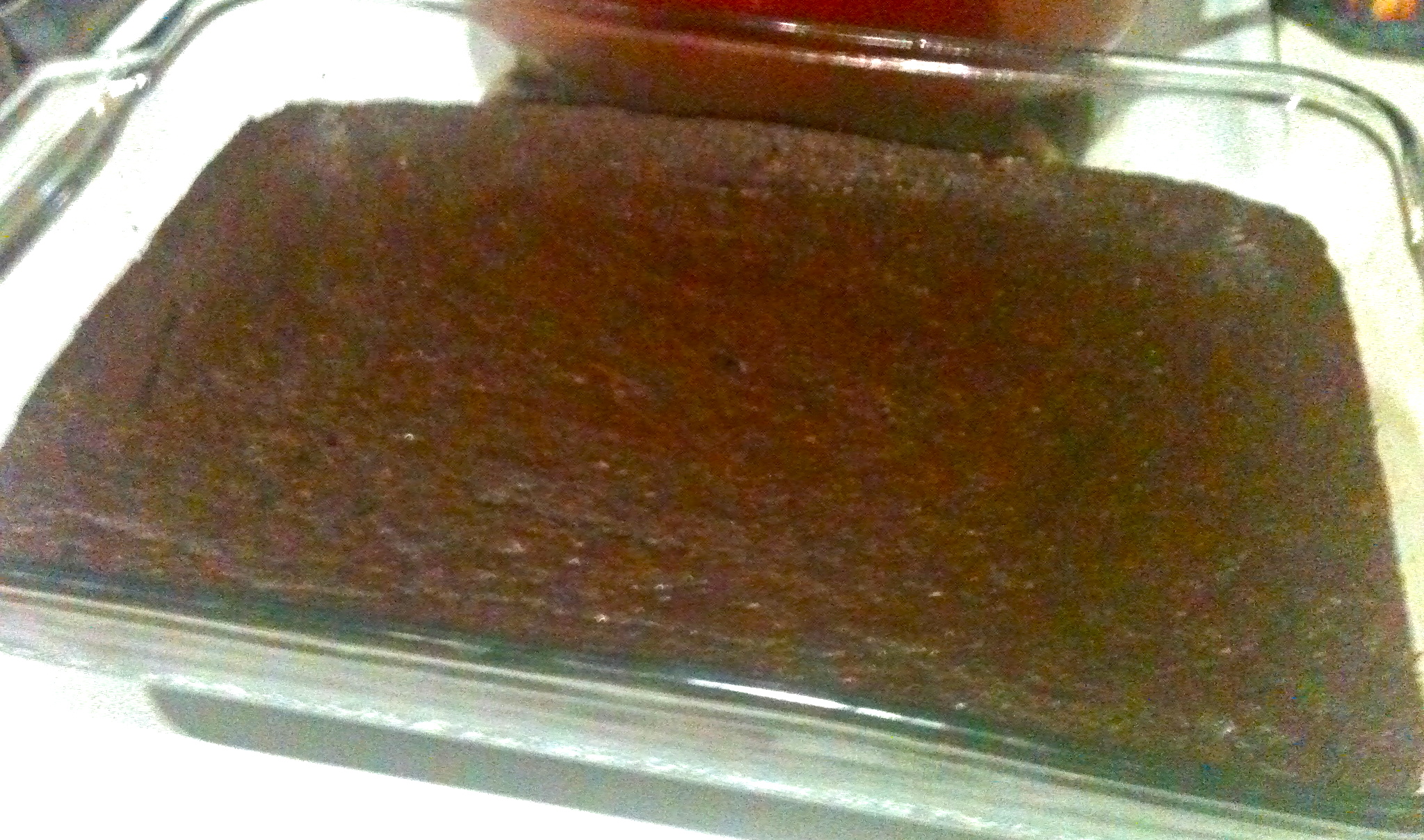
Cayenne Pepper and Orange Brownies.

Remember that Johnny Depp and Juliette Binoche movie called Chocolat? About a mother and her daughter who move to a little French town and open up a patisserie? It was a pretty cute movie, but more importantly, it was about chocolate. There’s one scene where a character drinks a cup of hot chocolate with some kind of chili pepper in it, and she loves how exotic and surprising the flavor is. This scene really stuck in my head–what an interesting combo that would be! I’ve wanted to try the chocolate-and-chili flavor duo ever since I first saw Chocolat, and when I decided to make brownies yesterday, I gave it a try. They turned out really well–the tiniest hint of pepper and orange gives these brownies a really deep and complex flavor.

INGREDIENTS

200 g unsweetened bakers chocolate
1 1/4 sticks softened butter
1 scant cup cocoa powder
3/4 cup almond meal (all-purpose flour works too)
1 tsp baking powder
1 3/4 cups sugar
1/8 tsp cayenne pepper
1 tsp orange zest
2 tbsp orange juice
4 eggs, lightly beaten

DIRECTIONS

Preheat oven to 350 F.
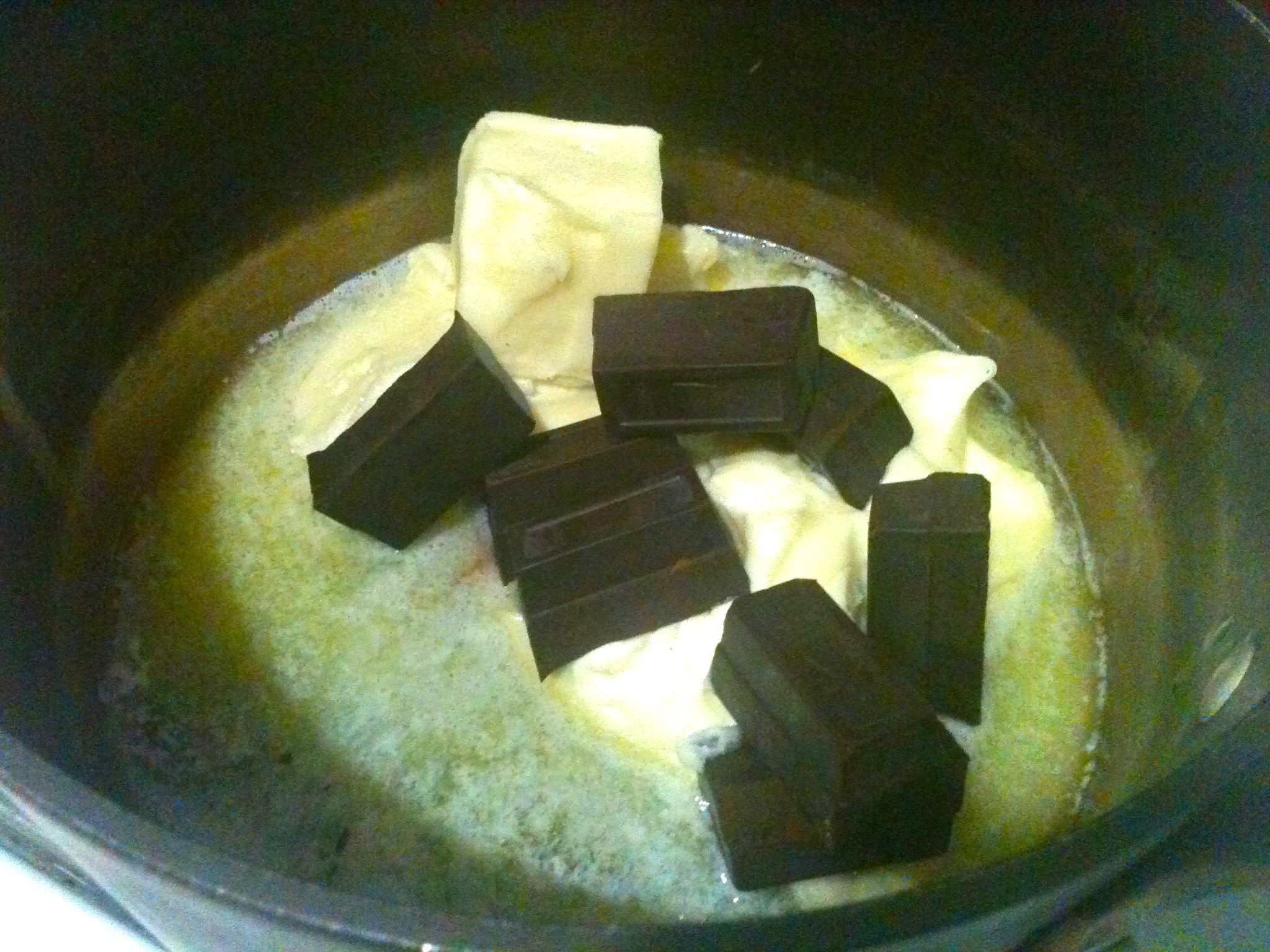
In a pan over very low heat, carefully melt butter and chocolate until smooth. Don’t burn it!

In a separate bowl, combine cocoa powder, almond meal or flour, baking powder, and sugar. Stir in the melted butter and chocolate and mix well.

Add cayenne pepper and orange zest and juice and combine.

Add to batter and stir until smooth.
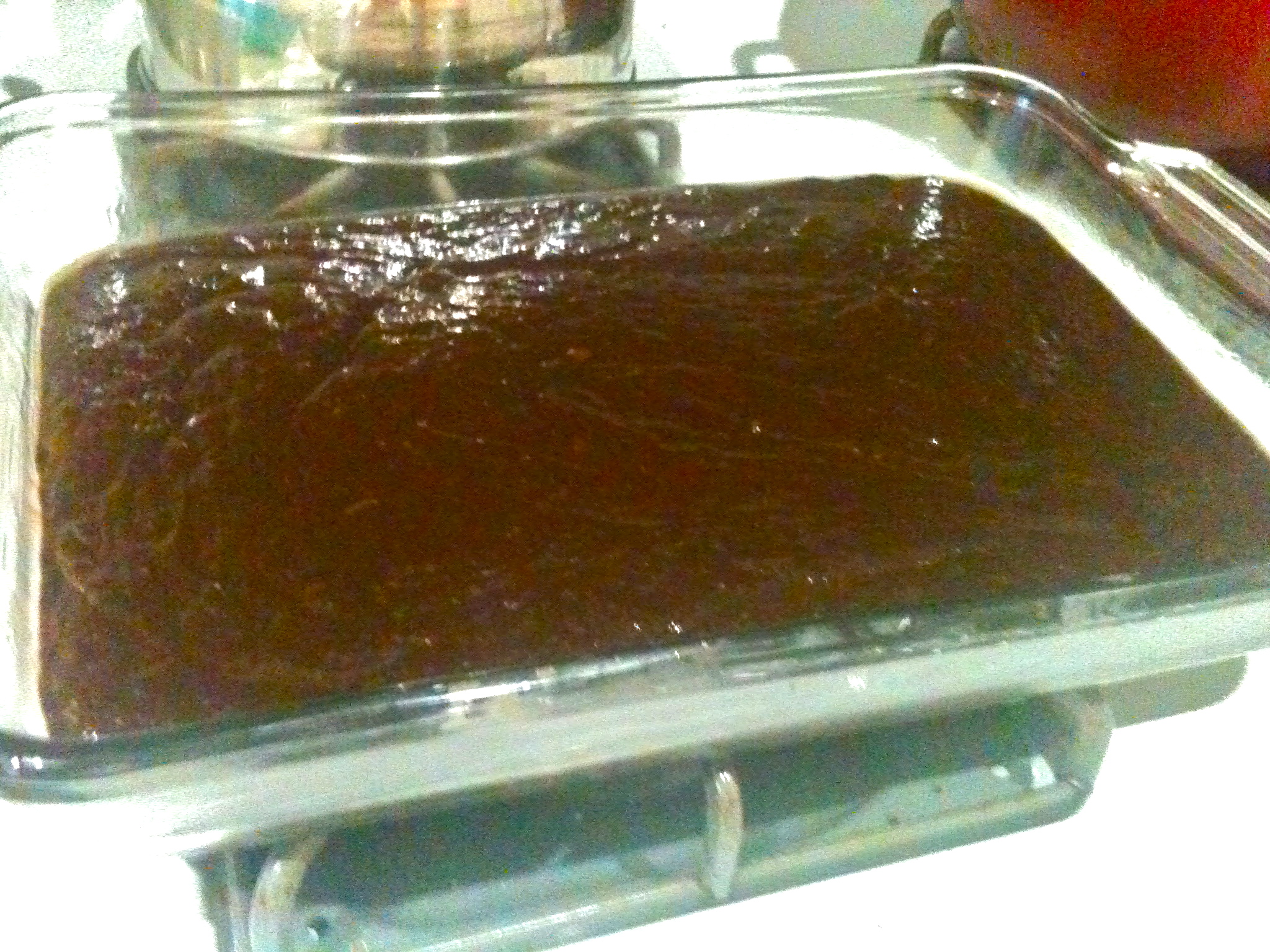
Pour into greased pan and bake for about 25 minutes. Cool 1 hour before cutting into them. Dust with powdered sugar and enjoy with a frosty glass of Blue Moon and an orange wedge…yum.
Easy French Bread.

My search for an easy recipe for a perfect loaf of French bread started on my trip to Denver last month. My cousin and I were browsing bread recipes and found them all totally convoluted, intense, and just impractical, so I promised that I’d find out the secret to easy French bread and then share it with her on this blog. Well, I’ve found that secret in another gem from my cooking idol, Laura Calder. I’ve switched up a few things from her original recipe: I added a bit more salt and used half whole wheat flour. A word of caution, though: it might be an easy recipe, but it takes a really long time—you might even say, foreverrrr.

INGREDIENTS

1 1/2 cups all-purpose flour
1 1/2 cups whole wheat flour
1/2 tbsp salt
1/4 tsp dry active yeast
1 1/2 cups plus 1/4 cup warm water
additional flour or cornmeal, for dusting

DIRECTIONS

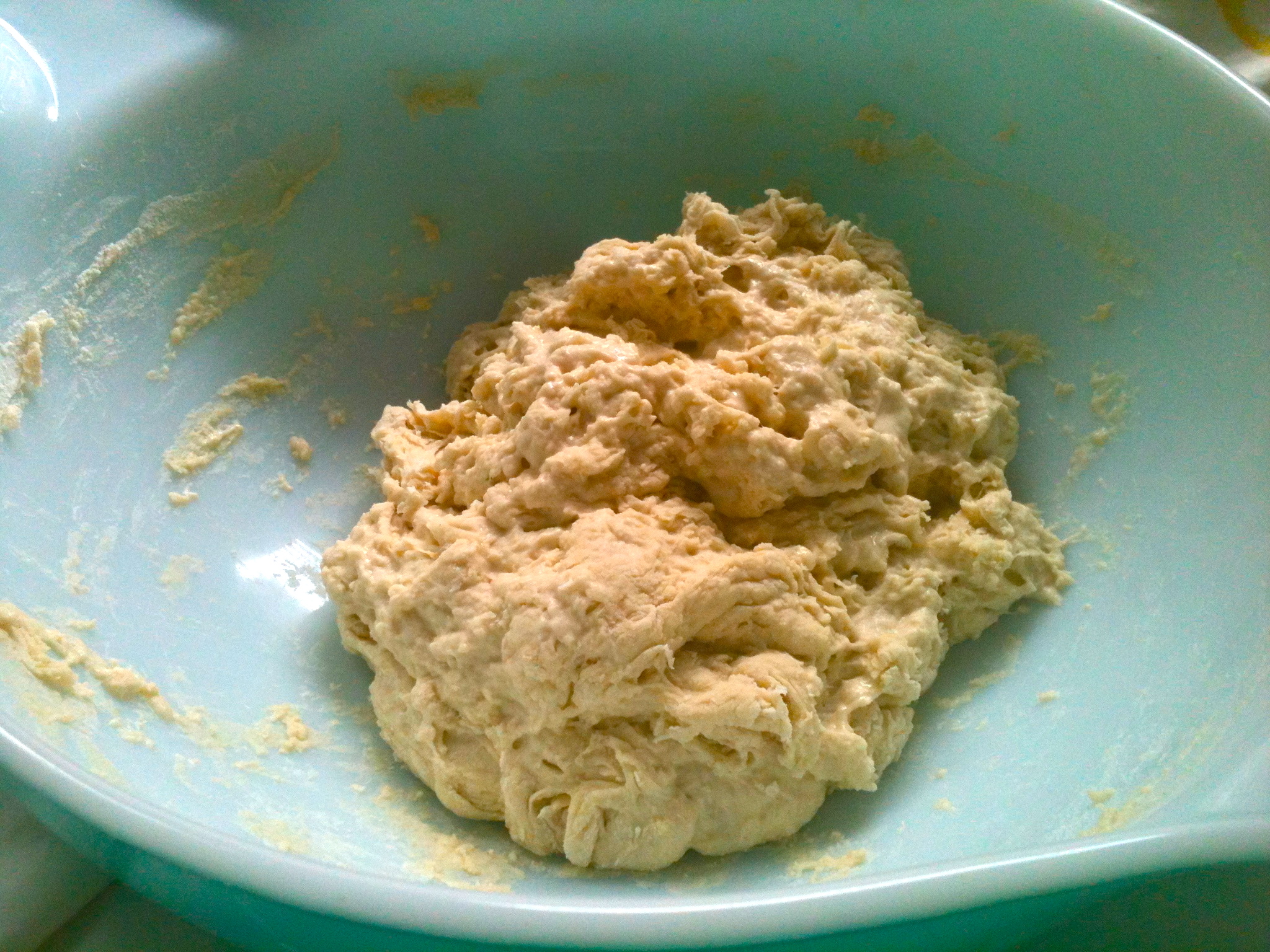
Whisk together flours, salt, and yeast. Stir in 1 1/2 cups warm water, and add the 1/4 cup water if needed. The dough should not be dry, and it’s okay if it’s pretty wet–it should be sticky, rather than a firm dough ball.

Cover the bowl with a tea towel or plastic wrap and let sit in a warm place for at least 12 hours, or at most 24 hours (I let mine sit 16 hours in the oven–keep the oven off, but leave the oven light on).

The dough is ready for the next step when you see little bubbles formed on top, and it will have just about doubled in size. If a brown crust has formed over the top of the dough, just use a spatula to fold it over once or twice to work this crust into the rest of the dough.

Take a tea towel and flour it generously. Place the dough onto the floured towel and turn the dough over so that all sides are floured. Knead it twice, fold the sides underneath it and shape into a dome.

Dust with more flour or cornmeal and wrap dough ball lightly in floured tea towel. Let sit for 2 hours.

Just before 2 hours is up, preheat oven to 450 F with Dutch oven or bread pan inside to heat. The dough ball will have more than doubled in size.

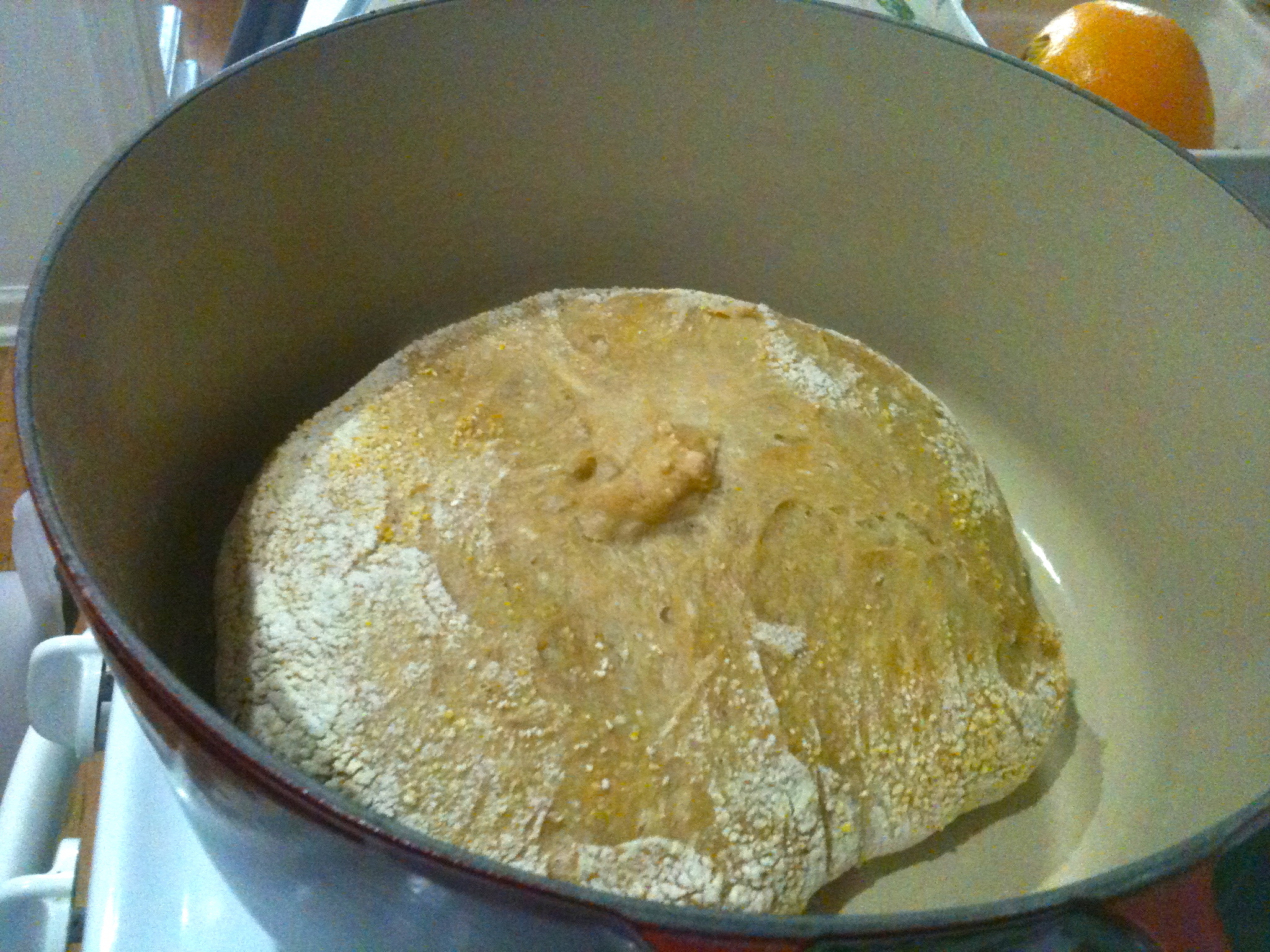
When the oven is preheated, transfer dough, seam side up, into the pan. Shake the sides of the pan to settle dough evenly, and bake for 30 minutes with the lid on.

After 30 minutes have passed, remove lid and let bread finish baking uncovered, about 20 minutes, until nicely browned.

I love this bread with cold butter and orange marmalade, and it makes great garlic bread too. Enjoy it, and be proud of how gorgeous this easy bread turns out!

Sausage and Onion Tart.

I struggle with making my own pastries. It’s so much easier to just buy a pre-made pastry, but I’m one of those people who gets weirded out by any product whose ingredients include things I wouldn’t add if I were making it myself. For example, “distilled monoglycerides” and “soybean oils colored with beta carotene” would never make it into my homemade pastry crust, but they are ingredients in Pepperidge Farm’s frozen puff pastry sheets. Just yuck. So I’ve been on a little journey to learn to make a decent pastry. The added bonus, of course, is that after I make the pastry, I get to use it in a recipe! Here’s one of my favorites so far: an easy pastry crust with simple toppings that makes a great little French lunch tart. Inspired by Laura Calder.

INGREDIENTS:

for pastry crust:
1/2 cup whole wheat flour
1/2 cup all-purpose flour
1 stick (8 tbsp) cold butter, cubed
2 egg yolks
pinch of salt
splash of water

for tart:
about 1/2 cup Greek yogurt or sour cream
1/2 small onion, sliced thin
4-5 uncooked breakfast sausages, sliced small (or  use bacon instead)
salt, pepper, and chopped parsley to taste

DIRECTIONS

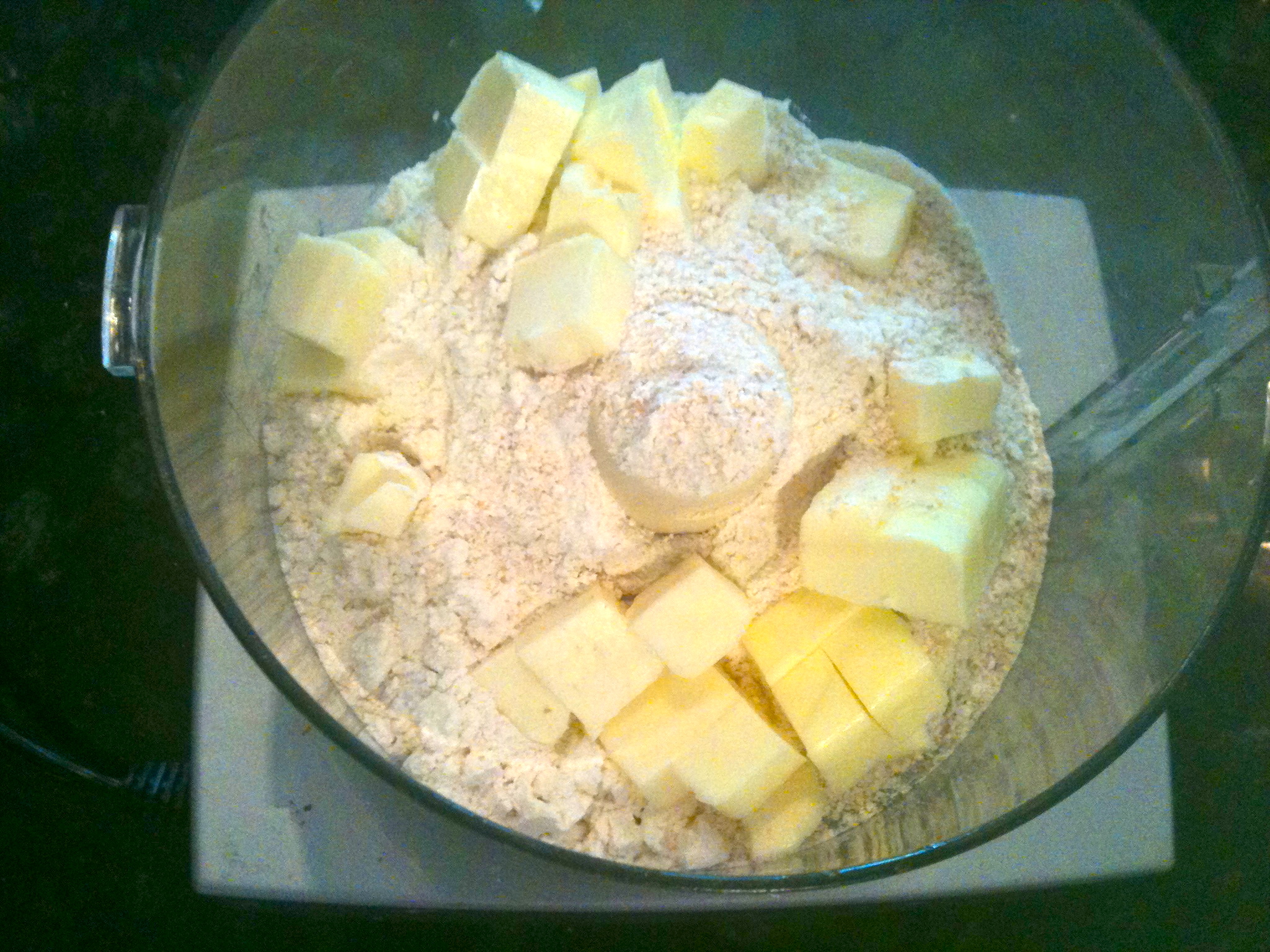
First, the pastry crust. In a food processor, blitz flours and butter until well-combined.

Then add egg yolks, salt, and a small splash of water to help it hold together, and pulse lightly until just combined. Turn out onto wax paper, mold into a ball, wrap tightly in paper, and refrigerate for 30 minutes.

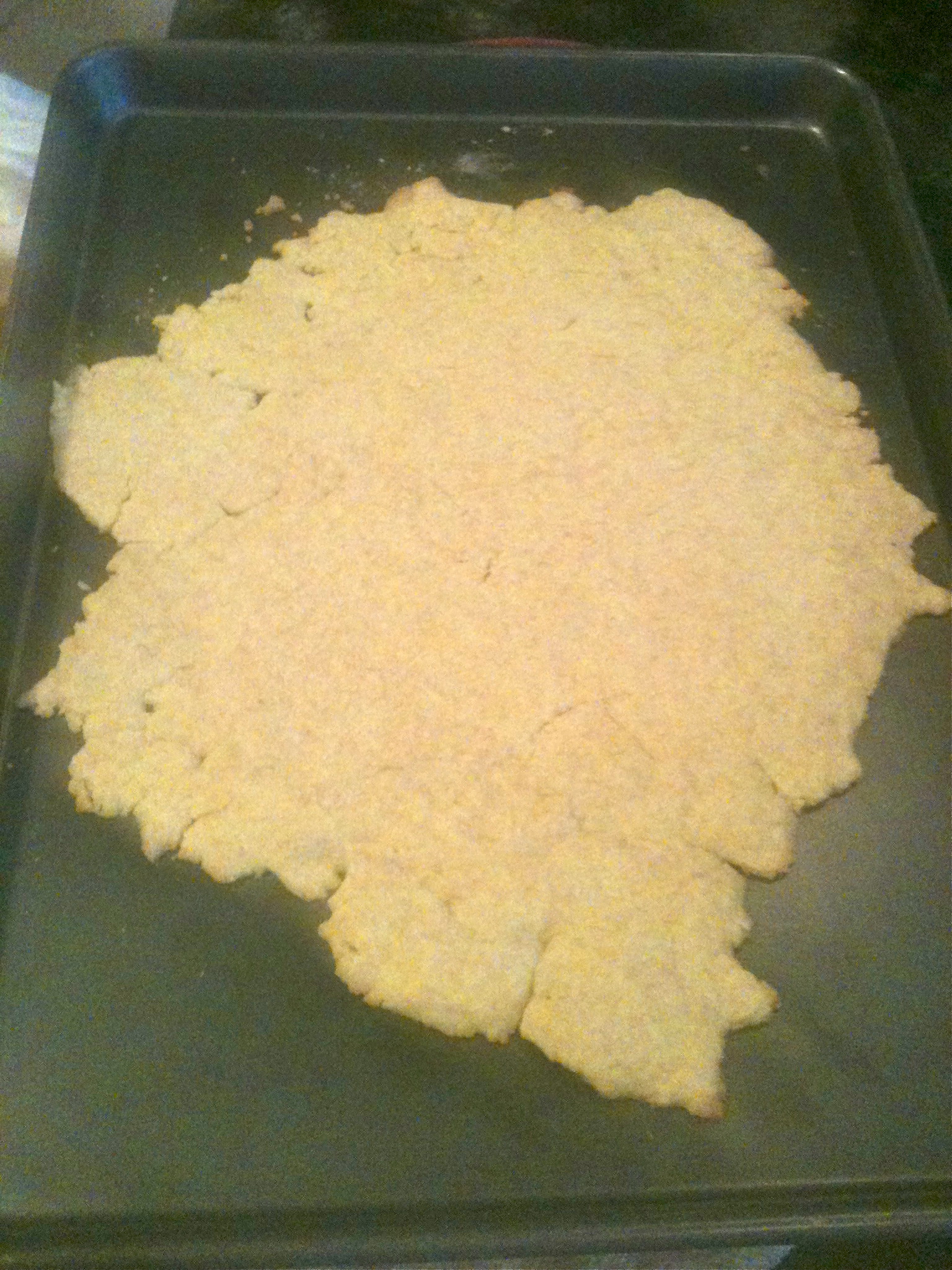
Preheat oven to 450 F. Remove chilled dough from fridge and let it warm up for about 5 minutes. On a floured surface, roll it out into a sort of free-form oval shape. Now it gets a bit tricky: carefully transfer to a baking sheet. It’s okay if it falls apart a little bit; I always have to put it back together a bit once it’s onto the pan. No need to be fancy! Just let it be. Par-bake your pastry crust for about 5 minutes, until the edges start to brown. Then remove from oven.

Let the crust cool for 5 minutes. Scoop the yogurt or sour cream onto the crust and carefully spread it out, right to the edges. I like to use my fingers to do this because the crust is so tender, it can fall apart easily. Then strew the onions, sausage, and seasonings over the crust and put it back in the oven for 15-20 minutes, until onions are browning at the edges and sausage is cooked. Let is cool a bit before serving and enjoy!

Borsch.

Borsch is so misunderstood. It’s a classic in Russian/Ukrainian cuisine, but despite my Russophile tendencies, I avoided borsch for years because I thought it sounded so…awful. But college is a time for experimentation, right? So during my senior year, I finally gave borsch a try, and it totally won me over! It’s a super hearty vegetable and beef stew that gets its characteristic garnet color from its most notorious ingredient: the beet. If you’re not a beet lover, you’ll probably still like borsch (it’s really good, I swear!),  just make sure to puree the cooked beet and tomato mixture before adding it to the broth pot. Old-world peasant cooking at its finest!

INGREDIENTS

1 1/2 lbs. stew beef, cubed
3 bay leaves
small onion, chopped
3 small red beets, scrubbed clean and cut into bars
14 oz. canned crushed tomatoes
1 tsp vinegar
2 carrots, peeled and cut into bars
2 celery stalks, chopped
large onion, chopped
2 medium potatoes, cubed
1/2 medium head cabbage, shredded
butter
olive oil
salt
pepper
2 cloves garlic, diced

DIRECTIONS

Fill a large pot or Dutch oven 3/4 of the way full with water and add beef and bay leaves. Bring to a boil.

When boiling, turn down to medium low heat and simmer. Skim off the fatty, foamy impurities that rise to the top.

When you’ve gotten most of the fatty bits out of the broth pot, add the small onion. Cover and simmer for an hour. Then remove the bay leaves.

Meanwhile, add butter or olive oil to a pan and heat over medium. When hot, add beets, crushed tomato, and vinegar. Stir well and simmer for an hour.

Fifteen minutes before the beets are done cooking, start the other veggies. Heat butter or olive oil in another pan over medium flame and add large onion, carrot, and celery. Cook for 15 minutes.

After you start the onion-carrot-celery mixture, turn up the heat on the broth and bring it back to a boil. Add potatoes and cabbage to the broth pot.

When the beets and tomatoes have finished cooking, add them to the broth, along with the sauteed veggies. Add salt, pepper, and garlic, stir well, and simmer for at least half an hour.

Serve with a dollop of sour cream and garnish with fresh chives or dill. Priyatnogo appetita!

Butter and Herb New Potatoes.

New potatoes are those little guys you see in spring and summer. They’re not fully grown when they’re harvested, hence the “new.” At a farmer’s market on Saturday morning, I found a whole big basket full of baby marbled potatoes, so I took a few home to cook for dinner. A word to the wise about this recipe: the whole time the potatoes and shallots were browning, I was cursing myself for having no bacon in the house. If you’re lucky enough to have it on hand, USE IT! And don’t you dare feel any food guilt afterward: potatoes, shallots, bacon, butter–that’s the price you pay for authentic French flavor. Just enjoy it.

INGREDIENTS:

1 1/2 cups new potatoes
garlic thyme olive oil
small shallot, diced
thyme
parsley
salt
pepper
pad of cold butter

DIRECTIONS

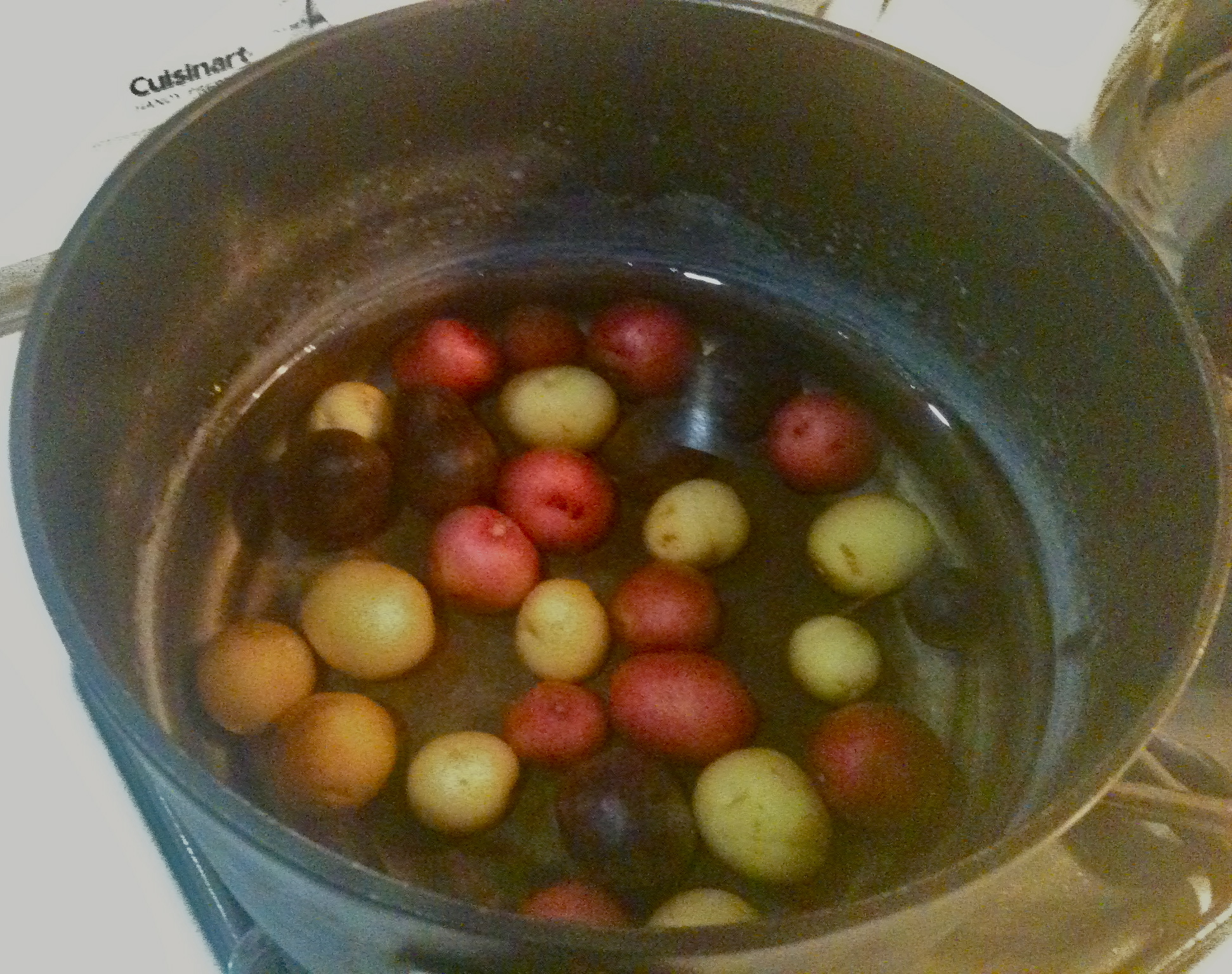
Wash potatoes thoroughly. Place in a pot and cover with cold water. Bring to a boil, let boil for  2 minutes, then drain.

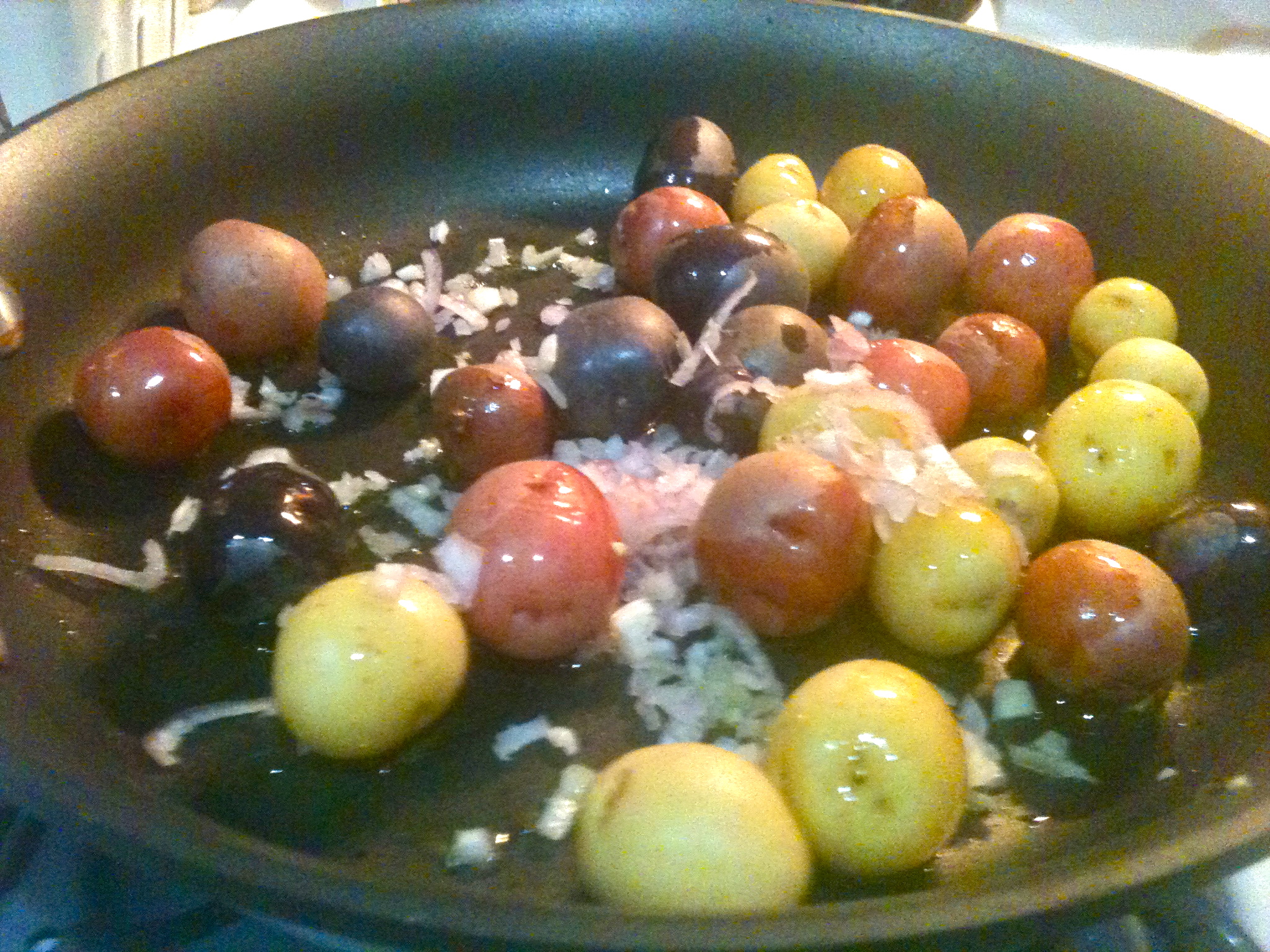
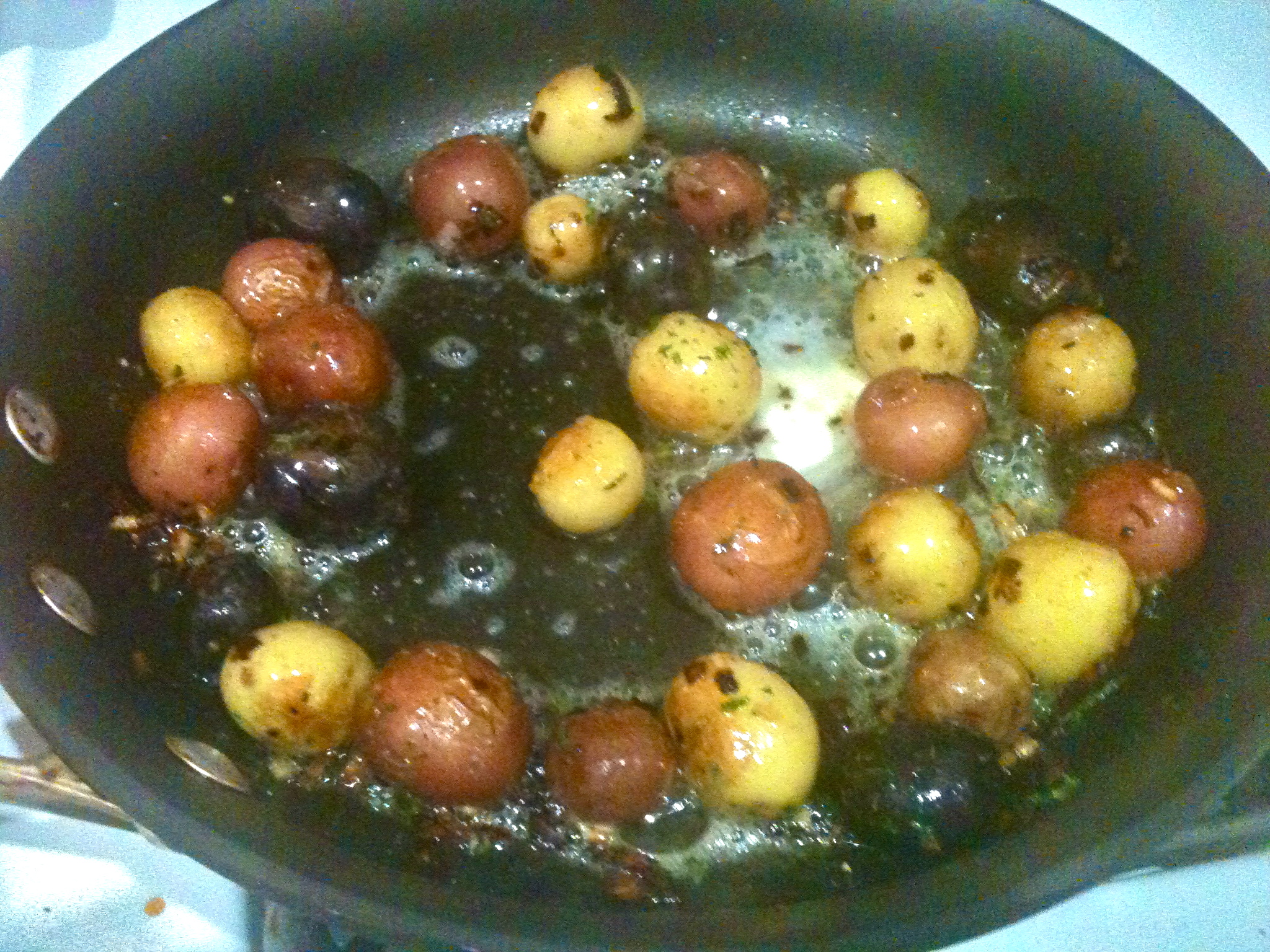
Heat olive oil in a pan over medium heat. Add potatoes and shallot and cook until browned.

When browned to your liking, remove from heat. Sprinkle lightly with parsley and thyme, and add salt and pepper to taste. Stir in butter until melted. Serve plain, or with sour cream.

Windowsill Herb Garden and Garlic Thyme Olive Oil.

Fresh herbs look, smell, and taste amazing, so of course they’re always welcome in my kitchen. But they’re really something of a luxury, aren’t they? Not anymore! This week I made a trip out to Gethsemane Garden Center to realize the city girl’s dream of growing my own herbs at home. There were a ton of gorgeous fruit, vegetable, and herb plants to choose from, so I decided to start off with a few of my favorites. And since I don’t have garden or porch space in my new apartment, my herbs grow in pots on my living room windowsill (for now…who knows how long I can keep these alive…). Also, a quick and easy but totally luxurious and aromatic olive oil “recipe” using herbs from my garden!

Here’s my lovely mint, great for tea:
UPDATE: I just discovered that this is actually a lemon balm plant, which is similar to mint but has a more lemony scent. Still great for tea though!

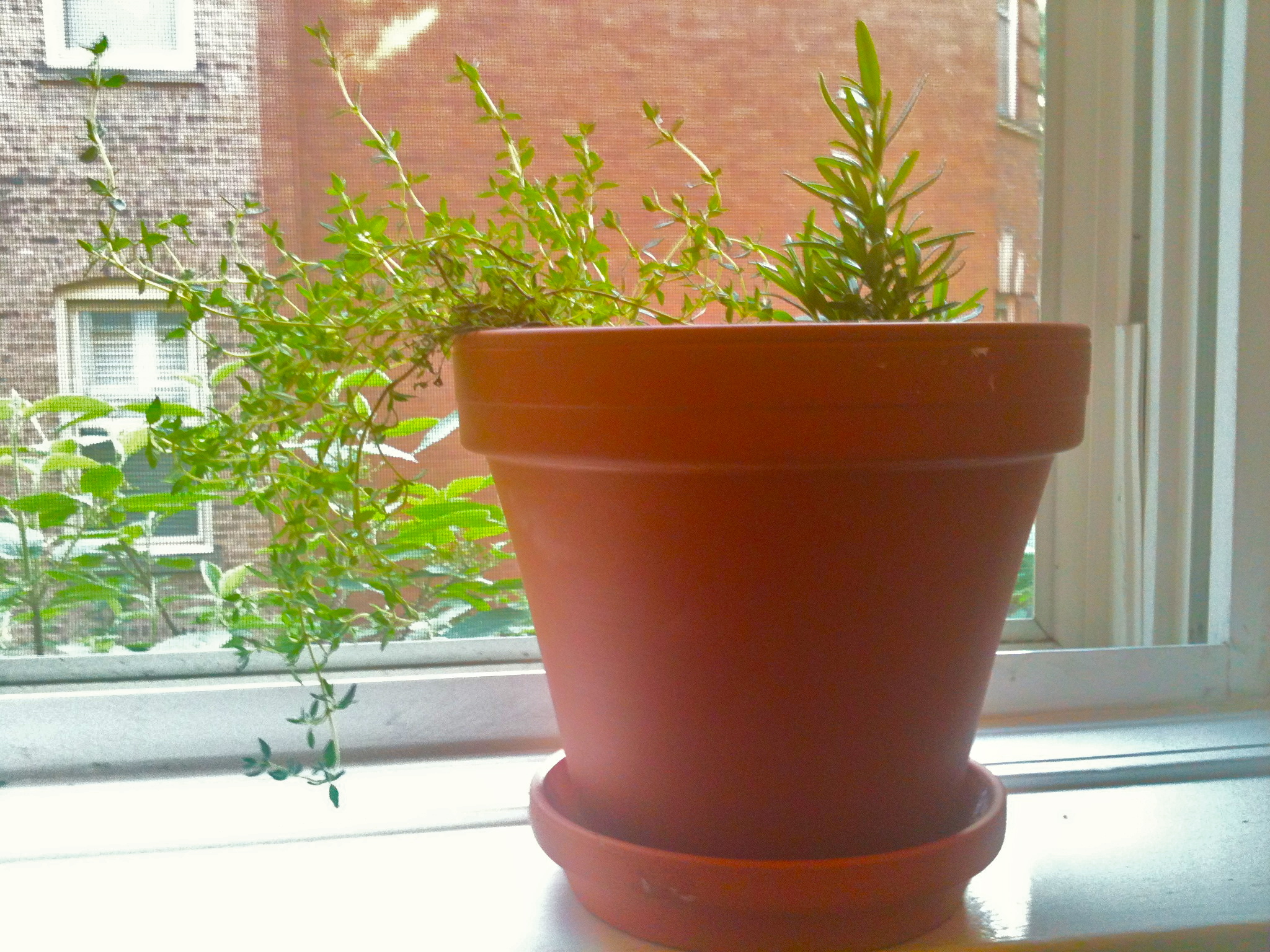
Rosemary and thyme, the second half of Simon and Garfunkel’s “Scarborough Fair”:

And my favorites, the parsley and chives:

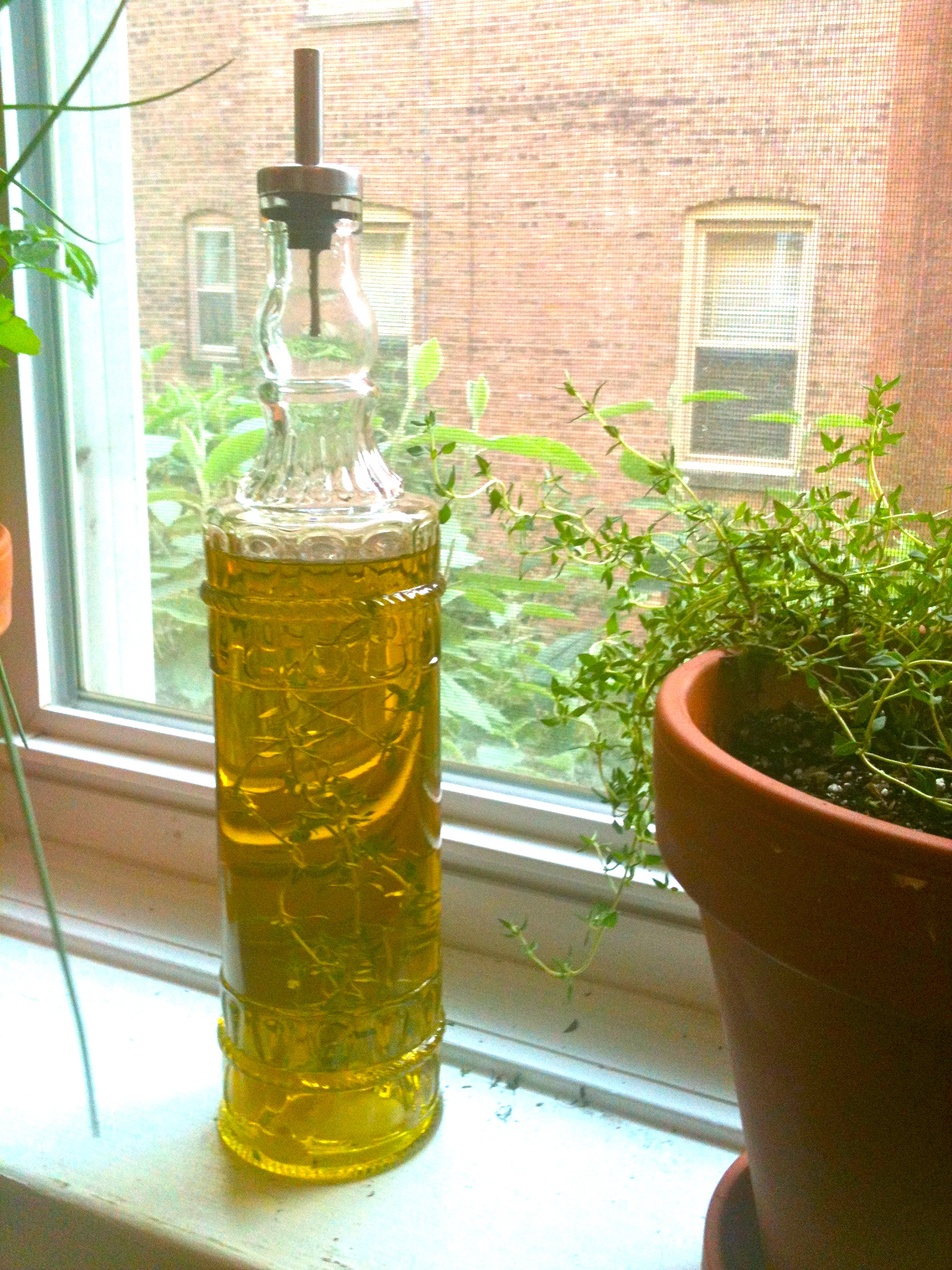
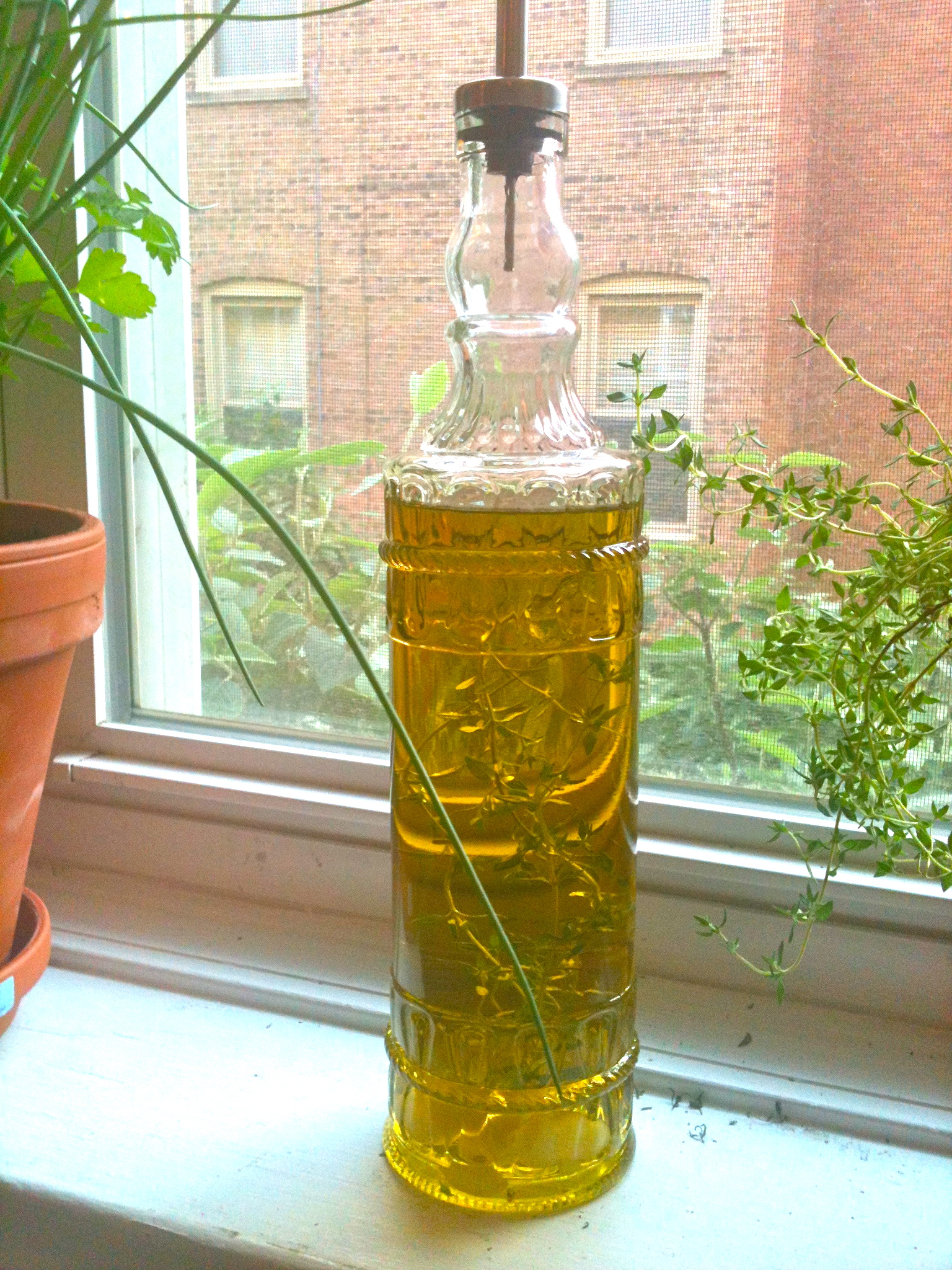
Now, let’s perk up that regular old olive oil and make it something special: Garlic Thyme Olive Oil.

INGREDIENTS:

Olive oil (Extra virgin is fine, but I like to use regular olive oil because it’s nicer to cook with)
3 sprigs of fresh thyme
3 cloves of garlic

DIRECTIONS:

Peel cloves of garlic. Rinse thyme and pat it dry. Let both garlic and thyme dry thoroughly, at least an hour (any water leftover can lead to spoilage).

Add washed and dried aromatics to a clean bottle and fill with olive oil. Let steep for 4 days, then remove thyme and garlic (again, to prevent spoilage). Use within 2 months. Great for sauteing veggies, making salad dressings, and dipping fresh-baked bread.